Tarot Spreads for Every Situation: A Reference Guide
Share
Tarot Spreads for Every Situation: A Reference Guide
A practical library of named tarot spreads for witches, from the daily single-card pull through to the full Celtic Cross, with position guides for each.
This guide is designed as a reference you return to. Whether you are a daily practitioner looking for a new spread to try or someone who has just picked up their first deck, you will find spreads here scaled to any question and any level of confidence.
Spreads vs Single-Card Pulls
A single-card pull gives you one focal point: one image, one symbol, one piece of energy to sit with. It is direct, uncluttered, and ideal when you have a clear, narrow question or when you simply want a daily touchstone. Most tarot practitioners use single-card pulls more often than any other method, precisely because simplicity forces engagement. When a single card is all you have, you have to actually look at it.
A spread introduces multiple positions, each assigned a specific role in answering your question. Card one might represent your current situation. Card two, the obstacle. Card three, advice. The positions create a framework that allows the cards to speak in relation to one another, building a narrative rather than a single statement. The tension between two cards in adjacent positions is often where the most useful insight lives.
When should you use a spread rather than a single card? Consider a spread when your question has multiple moving parts, when you are facing a decision with real consequences, when you want to understand a situation from several angles at once, or when a single-card reading has left you with more questions than clarity. There is no rule about minimum experience required before using a spread. Start with the smaller ones and work toward the larger structures as your confidence grows.
One practical note before you begin: decide your question before you shuffle. Vague questions produce readings that feel unhelpful. The more specific your question, the more specific the spread can be in response.
The Eight Spreads
1. Single Card Daily Pull
1 card | Best for: daily grounding, morning intention-setting, quick check-ins
The single card pull is the most durable habit in a tarot practice. One card drawn each morning, before the day's noise sets in, gives you a lens through which to notice the day as it unfolds. There is no wrong way to interpret it. Some readers journal a sentence or two. Others simply look, note their first impression, and carry it with them.
- Today's theme, energy, or guiding focus
Tip: keep a running log of your daily cards for a month. The patterns that emerge tell you far more than any single card.
2. Past, Present, Future
3 cards | Best for: understanding how a situation developed, where it stands, where it is heading
The Past-Present-Future spread is one of the oldest and most universal layouts in tarot. Its simplicity is its strength: three cards, three clear positions, a direct narrative arc. It works for almost any question and is an excellent spread to learn early because the three-position logic is the foundation for many more complex spreads.
- What has led to this situation; the past energy or event influencing the present
- Where things stand right now; the current energy or the heart of the matter
- The likely direction or outcome if current energy continues; what is moving toward you
3. Decision Fork
5 cards | Best for: weighing two options, major decisions, crossroads moments
The Decision Fork is designed for moments when you are genuinely torn between two paths. It does not tell you which choice to make: it illuminates the energetic qualities of each path and brings a hidden factor to your attention. Many readers find that the fifth position, what you know when you trust yourself, is the card that cuts through the analysis.
- The energy, likely experience, or consequence of choosing Path A
- The energy, likely experience, or consequence of choosing Path B
- A hidden factor influencing the decision that may not be fully visible yet
- What you need to know, understand, or acknowledge before deciding
- What becomes available to you when you trust your own knowing
4. Shadow Mirror
4 cards | Best for: shadow work, self-awareness, cycles of self-sabotage, inner work
The Shadow Mirror is a spread for honest self-examination. It asks you to look at the gap between the self you present and the parts of yourself you keep in the dark. It is best approached slowly, with a journal nearby. This is not a spread for a rushed reading. Give each card real time.
- What you show the world; the face or version of yourself most visible to others
- What you hide; the aspect of yourself kept private or suppressed
- What you fear; the underlying dread or belief driving the hiding
- What you are ready to release; what is becoming light enough to let go of now
5. Relationship Lens
5 cards | Best for: understanding a relationship dynamic, any important connection
The Relationship Lens does not judge a relationship as good or bad. It maps the energies involved, the dynamic being created between them, and what the relationship needs to develop well. It works equally well for a romantic connection, a friendship in tension, or a working relationship that has become complicated.
- Your energy in this relationship; what you are bringing, consciously or otherwise
- Their energy in this relationship; how they are showing up
- The dynamic created between you; the third energy formed by your interaction
- What needs attention or addressing for this relationship to grow or heal
- The potential of this connection if both parties are bringing their best
6. New Moon Intentions
6 cards | Best for: new moon ritual, beginning a new cycle, setting intentions for the coming month
The New Moon Intentions spread is structured around the lunation cycle. It is most potent when performed on the evening of or day after the new moon. Each position corresponds to a stage of the lunar cycle: where you begin, what you release, what you call in, how you act, what you navigate, and what gift the cycle ultimately brings.
- Where you are now; the ground you are standing on as this cycle begins
- What to release; what is ready to be left behind as the moon darkens
- What to call in; what you are inviting forward in this lunar cycle
- The action to take; what concrete step is being indicated
- The challenge to expect; what is likely to test you during this cycle
- The gift of this cycle; what becomes available to you if you do the work
7. Year Ahead
13 cards | Best for: new year, birthday, major life transition, annual review
The Year Ahead spread is best performed around your birthday, at the new year, or at any significant threshold. Lay the twelve monthly cards in a circle or arc, then place the thirteenth card at the centre as the annual theme. Read the theme card first, then move through the months in order.
- Month one: the energy, invitation, or dominant theme
- Month two
- Month three
- Month four
- Month five
- Month six
- Month seven
- Month eight
- Month nine
- Month ten
- Month eleven
- Month twelve
- The annual theme card: the overarching energy or lesson of the whole year
8. The Celtic Cross
10 cards | Best for: complex situations, deep readings, when you need a full picture
The Celtic Cross is the most widely recognised tarot spread in Western practice. Its longevity speaks to its usefulness: when a situation is genuinely complex and has multiple layers, the Celtic Cross provides a structure deep enough to hold all of it. It rewards careful, card-by-card reading followed by a synthesis of the whole.
- The heart of the matter; what the reading is fundamentally about
- The crossing card; what is crossing or complicating the central card (lay sideways across card one)
- The root; the foundation of the situation, what lies beneath it
- The recent past; what has just passed or is passing out of the picture
- The possible crown; what may come into being if things develop favourably
- The near future; what is moving toward you in the immediate term
- The questioner's position; how you see yourself in this situation
- External influences; how others see you, or external forces at work
- Hopes and fears; what you are hoping for or afraid of
- The outcome; the likely resolution if the current trajectory continues
Creating Your Own Spread
Every named spread was invented by someone. When an existing spread does not quite fit your question, building your own is a natural next step.
Step 1: Define your question clearly. Write it down. A spread built around a sharp question will always outperform a spread built around a vague one.
Step 2: Decide how many cards you need. Use one card per distinct aspect of the question you genuinely want illuminated. If you cannot explain what a position means, remove it.
Step 3: Assign each position a specific, distinct role. Write the position names before you shuffle. Each position should ask one thing only, and no two positions should overlap significantly.
Tips for Reading Any Spread
- Read each card in its position individually before drawing connections between them.
- Step back and read the spread as a whole. What story are the cards collectively telling?
- Pay attention to suit dominance: a spread heavy in cups vs swords carries its own message.
- Note reversals if you use them, but do not let them dominate over upright cards.
- If a card confuses you, sit with it. Your first uncomfortable impression is often the most accurate.
- Journal the reading as you go, or immediately after. Your records become one of the most valuable documents in your practice.
Find Your Deck
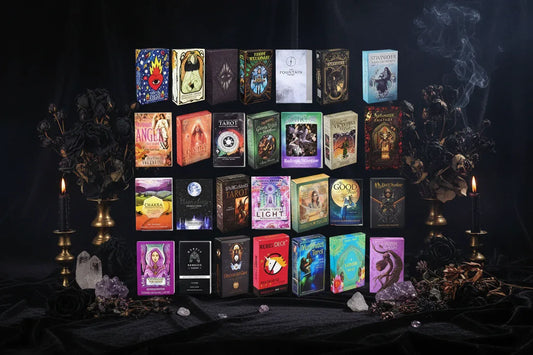
A spread is only as alive as the deck you use with it. Browse the full range of tarot and oracle decks. For a deeper look at how to interpret each spread step by step, see the full tarot spreads technique guide.
Frequently Asked Questions
How many cards is too many for a spread?
Most experienced readers find that spreads beyond 10 to 12 cards become difficult to read coherently in a single session. The Celtic Cross at 10 cards is widely considered the practical ceiling. A well-constructed 5 to 7 card spread often outperforms a larger one with loosely defined positions.
Can you redo a spread if you do not like the result?
You can. However, if the spread gave you a clear answer you simply do not want to hear, reshuffling is unlikely to change the underlying message. If you genuinely asked the wrong question, cleanse the deck and try again after a few hours or a day.
Do card positions change the meaning of a card?
Yes. A card's position significantly shapes how its meaning is applied. The same card in a recent past position versus a potential outcome position carries different implications. Learning to apply a card's range of meanings to its positional context is a core skill of tarot reading.
Which spread is best for a beginner?
Start with the Single Card Daily Pull and use it consistently for at least two to four weeks. When ready for multiple cards, the Past-Present-Future is the natural next step. Its three positions are intuitive and it handles a wide range of questions well.
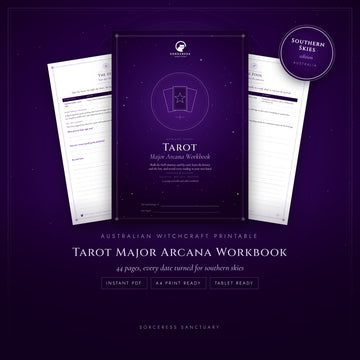
Printable tarot workbook
Give every card its own page
Learn the deck by candlelight. Each card gets a page of meanings, keywords and room for your own reading, and every spread you try has somewhere to live. Works with any standard deck. Instant A4 PDF.