What’s in This Guide
What Samhain Actually Is
What is Samhain?
Samhain (pronounced sow-in) is the Celtic fire festival marking the end of the harvest season and the beginning of the dark half of the year, observed on 31 October in the Northern Hemisphere and 1 May in the Southern Hemisphere, understood in Celtic tradition as the night when the boundary between the world of the living and the world of the dead was thinnest and ancestors could most readily be honoured, communicated with, and invited back for a final feast before winter.
Samhain is one of the four major Celtic fire festivals, alongside Imbolc (1 February), Beltane (1 May), and Lughnasadh (1 August). These four cross-quarter days mark the midpoints between the solstices and equinoxes and were considered the most magically and spiritually potent moments of the year. Of the four, Samhain was considered the most powerful: the hinge point of the entire year, the threshold between the old and the new, the living and the dead, summer and winter.
Early Irish texts including the Fled Bricrenn and the 10th-century Cath Maige Tuired document Samhain as a time of great gathering, great feasting, and great danger: the boundaries between worlds were not only thin but actively open. This was understood as simultaneously an opportunity for connection with the ancestors and a time requiring protective magic to ensure that what crossed back through the open veil was invited rather than intrusive.
Read: The Eight Wiccan Sabbats: Complete GuideSouthern Hemisphere Samhain: 1 May
In Australia and the Southern Hemisphere, the seasonal position of Samhain (end of harvest, beginning of the dark half of the year, cold and darkness increasing) falls at the beginning of May, not at the end of October. 31 October in Australia is actually the Southern Hemisphere's equivalent of Beltane, a celebration of early summer and fertility rather than of death and ancestors. Many Australian and Southern Hemisphere pagans observe Samhain on 1 May for seasonal alignment. Others celebrate on 31 October as a matter of cultural tradition and global pagan solidarity. Both approaches are valid and both are practised in Australia.
How Halloween Got Its Modern Form
Modern Halloween is a layered thing: ancient Celtic roots, medieval Christian adaptation, Victorian revival, and 20th-century American commercialisation, all deposited on top of each other like geological strata. Each layer is real, and each contributed something to the holiday as it exists today.
The Celtic Foundation
Samhain, as documented in early Irish tradition, was observed with bonfires lit on hilltops to guide the returning dead and to ward off harmful spirits, the leaving of offerings at the threshold for ancestors, feasting that included a place set for the dead at the table, and the wearing of disguises to confuse malevolent spirits who might be wandering on this most permeable of nights. The disguise tradition is the direct ancestor of Halloween costumes: you dressed as something frightening or uncanny so that any genuinely hostile spirit would mistake you for one of its own.
The Christian Overlay
When Pope Gregory III moved the Feast of All Saints to 1 November in the 8th century CE, the evening before it (All Hallows Eve) fell directly on the existing Samhain celebrations. Rather than suppressing the existing festival, the Church absorbed and adapted it, much as it did with Yule, Ostara, and Imbolc. The name Halloween is simply a contraction of All Hallows Eve. The day after All Saints Day (2 November) became All Souls Day, preserving the practice of praying for and making offerings to the dead within a Christian framework.
Trick or Treat and Jack o'Lanterns
Trick or treating derives from two older practices. Souling was a medieval British and Irish custom in which poor people went door to door on All Souls Day, offering prayers for the households' dead in exchange for soul cakes: small spiced pastries. Guising was a Scottish and Irish practice of going house to house in costume, performing a song, poem, or trick in exchange for food or coins. Both practices emigrated with Irish and Scottish communities to North America and fused into trick or treating through the late 19th and early 20th centuries.
Jack o'lanterns were originally carved turnips. The Irish tradition of carving frightening faces into turnips and placing candles inside them to ward off malevolent spirits emigrated to North America with the Irish diaspora following the Great Famine of the 1840s. Pumpkins, native to the Americas and far easier to carve than turnips, were adopted rapidly as a substitute and became the form we recognise today.
The Thinning of the Veil: What It Actually Means
Why is the veil thin at Halloween?
In Celtic and pagan tradition, the veil between the world of the living and the world of the dead is understood to be at its thinnest at Samhain because this is the moment in the year's cycle when the boundary between summer and winter, growth and dormancy, life and death is most pronounced: nature itself is in a state of dramatic transition, and the same threshold energy that transforms the physical world also thins the boundary between physical and non-physical reality.
The "veil" is a metaphor for the boundary between the ordinary physical world and whatever lies beyond it: the realm of the ancestors, of spirits, of those who have died. At most points in the year, this boundary is relatively opaque: the dead are present in some sense, but communication is difficult and access is limited. At Samhain, the boundary thins and becomes more permeable in both directions. The ancestors can reach through more easily, and the living can sense and contact them more readily.
This is why Samhain is the primary time for ancestor work, for divination, and for any magical practice that involves communication across the boundary of death. It is also why protective magic was historically so important at this time: a thin veil means not only the beloved dead but also less benevolent entities can move more freely, which is why the original Samhain practices included so much protective work alongside the ancestor connection.
Halloween Witch Myths: What the Evidence Actually Shows
The Halloween witch, with her pointed hat, flying broomstick, black cat, and cauldron, is one of the most recognised images in the world. Almost none of it reflects actual pagan witchcraft practice. Here is what the historical and documentary evidence shows about each element.
"Witches fly through the night on broomsticks, especially on Halloween."
The flying broomstick image comes from early modern witch trial confessions, many of which were extracted under torture. Some historians have proposed a connection to psychoactive ointments made from plants containing alkaloids, which when absorbed through the skin could produce vivid sensations of flight, and that the besom (broom) may have been used as an applicator. Whether or not this theory is correct, literal nocturnal flight was never part of any actual pagan or witchcraft practice. The besom has genuine pagan significance as a ritual purification tool used to sweep sacred space energetically, not physically, and it appears in the besom guide. Flying is a later literary and persecution-era invention.
"Witches wear tall pointed black hats as part of their tradition."
The pointed hat has no origin in pagan or witchcraft tradition. Historians have traced several possible sources: the Judenhut or Jewish hat, a pointed cap that Jewish people were forced to wear in parts of medieval Europe, and which became associated with heretics as persecution imagery spread; the tall-crowned hats fashionable in 17th-century England that were worn by both Quakers and rural English women who became associated with folk practice; and early illustrations of alleged witches by persecuting authorities who used the hat as a visual marker. No pagan tradition prescribes a pointed hat as ritual dress. The modern witch hat is a Halloween costume drawn from persecution-era illustration, not from actual practice.
"Black cats are a witch's familiar and a central part of witchcraft practice."
The familiar, a spirit or animal companion that assisted a witch in their work, is documented in 16th and 17th-century English witch trial records. Animals including cats, dogs, toads, and rabbits were named as familiars in trial testimony, and black cats in particular became associated with witchcraft through this legal documentation. In actual contemporary pagan and witchcraft practice, the concept of the familiar exists as a meaningful tradition of relationship with an animal or spirit companion, but it is not specific to black cats, and black cats have no inherent magical superiority over cats of any other colour. The association is a product of the persecution record rather than of actual practice. Many witches have cats. Many have dogs, birds, and no pets at all.
"Witches brew poisonous potions in cauldrons and cast evil curses on Halloween."
The cauldron is a genuine pagan magical tool with deep roots in Celtic tradition: the cauldron of Dagda in Irish mythology was a vessel of abundance and regeneration, and cauldrons appear throughout Celtic mythology as symbols of transformation, wisdom, and the otherworld. In modern witchcraft, the cauldron is used for burning herbs and papers as a firesafe vessel, for making simmer pots, and as an altar piece representing the element of water. It is a tool of transformation, not of malice. The "evil witch brewing poison" is a medieval Christian characterisation of folk herbalism, in which knowledge of plants including their toxic properties was held primarily by women and became grounds for persecution.
What Witches Actually Do at Samhain
Where the Halloween witch of popular imagination is a Halloween costume, the Samhain practices of contemporary pagan witches are genuine, thoughtful, and oriented toward the actual meaning of the festival: the honouring of the dead, the marking of the year's end, the welcoming of the dark half of the year, and the use of this potent time for the magical work that is most accessible when the veil is thinnest.
How to Build a Samhain Ancestor Altar
The ancestor altar is the heart of Samhain practice. It is a dedicated space that invites the beloved dead to be present, offers them sustenance, and makes a physical gesture of continued relationship across the boundary of death.
| Element | What to Use | Why It Is Included |
|---|---|---|
| Photographs | Photos of those who have died: family, friends, beloved animals | The image creates a point of connection and recognition for the returning ancestor |
| Objects | Something that belonged to the person: a piece of jewellery, a book they loved, a handwritten note | Personal objects carry the person's energy most directly |
| Food and drink | Their favourite food and drink, or traditional offerings: bread, wine, water, fruit. Changed daily while the altar is active. | Feeding the dead is one of the oldest ancestor traditions in recorded human history across all cultures |
| Candles | White or black candles. White for remembrance and guidance. Black for depth and the threshold. | Light guides the dead home. The candle signals that they are welcome and expected. |
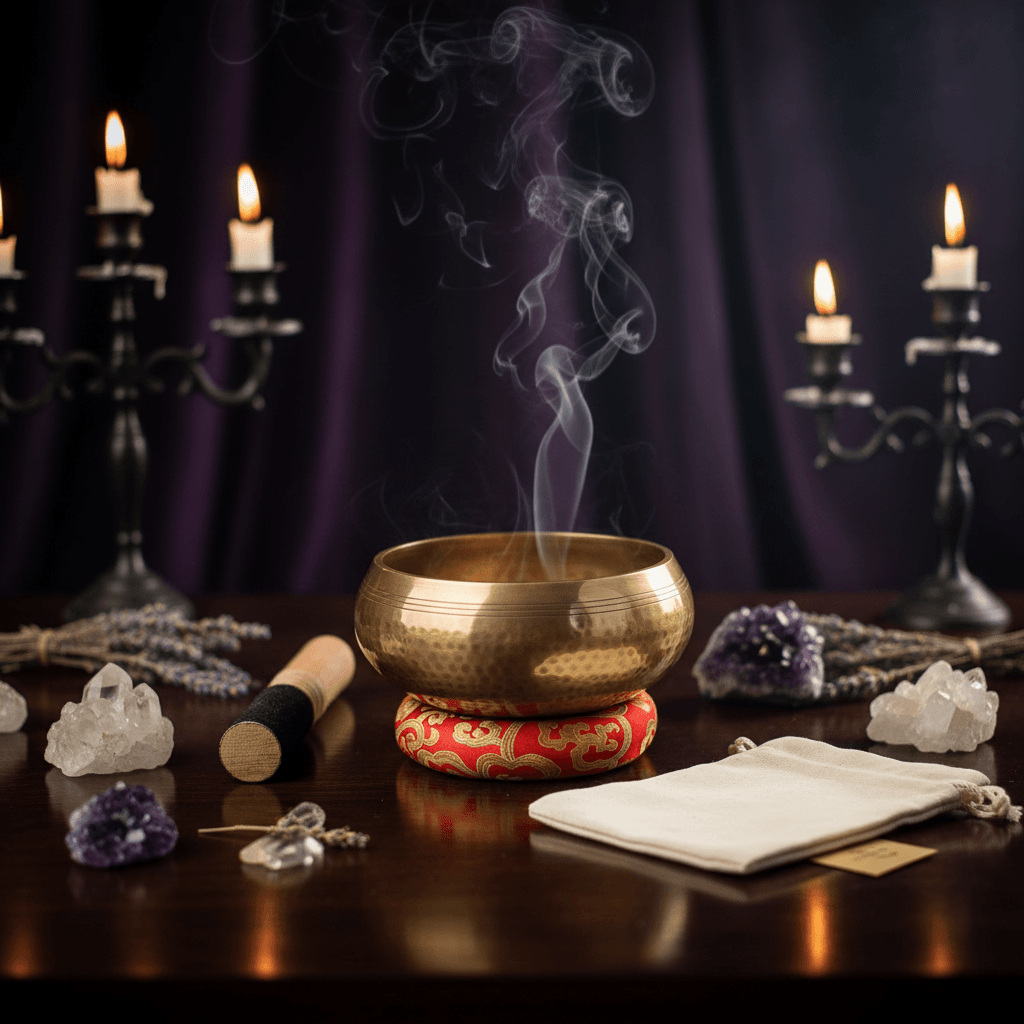
| Incense or smoke | Mugwort (associated with spirit communication), frankincense (sacred to the dead across many traditions), copal (traditional in Mexican Dia de los Muertos practice) | Smoke creates a bridge between worlds: it moves from the solid to the ethereal and carries intention across the threshold |
| Water | A small bowl of fresh water, changed daily | Water sustains the dead in most ancestor traditions and keeps the connection clear and flowing |
| A letter | A handwritten letter to the ancestor: what you want to tell them, what you want to ask them, what you miss | Writing makes the communication intentional and specific rather than vague. The letter can be burned at the ritual's close to send it. |
Honouring Ancestors You Did Not Know or Did Not Love
Ancestor work does not require that you had a loving relationship with the people you are honouring. Many practitioners honour ancestors they never met: grandparents, great-grandparents, people from earlier in their family line. Others choose to honour chosen ancestors, people who were not blood relatives but who shaped them significantly. And some find ancestor work complicated by difficult family relationships. It is entirely appropriate to honour only those ancestors with whom you feel safe doing so. The altar does not require you to include everyone in your family tree, and it is appropriate to set protective boundaries on who you are inviting to return.
The Samhain Divination Spread
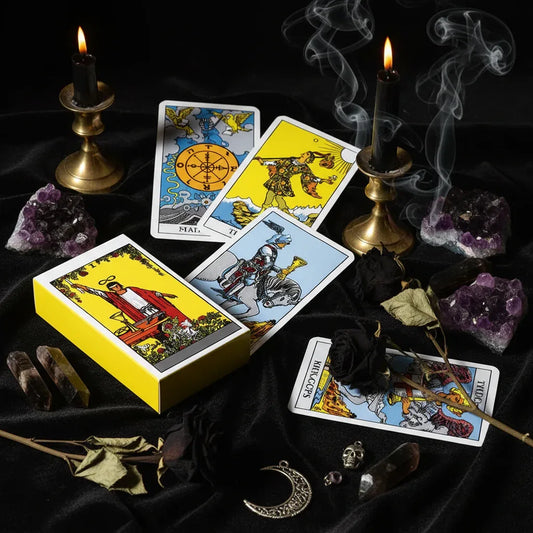
Tarot and oracle cards are particularly potent at Samhain because the thinning of the veil is understood to make intuitive access clearer. This six-card spread is designed specifically for the year's turning: it addresses what is ending, what the ancestors wish you to know, what is beginning in the new year, and what this dark half of the year is asking of you.
Use any tarot or oracle deck you feel drawn to. Choose a deck that resonates with the depth and seriousness of the occasion. Light your ancestor candles before drawing. Sit in quiet for at least three minutes before beginning. Record the reading in your Book of Shadows with the date and a follow-up note added at the next Samhain.
The Complete Samhain Ritual
A Solitary Samhain Ritual for the Modern Witch
A complete Samhain working integrating ancestor honouring, a releasing spell, and a blessing for the year ahead. Can be performed on 31 October (Northern Hemisphere) or 1 May (Southern Hemisphere). Takes approximately 45 minutes. Best performed after dark, when the veil is understood to be at its thinnest.
-
Cleanse the space with smoke. Move the smoke around the full perimeter of your working space, particularly across doorways and windows. Speak: "I cleanse this space and open it to the beloved dead and the forces of this sacred night. What is harmful, leave. What is loving, enter and be welcome."
-
Cast or define your circle using whichever method you practise. If you are new to circle casting, a simple walk of the perimeter with your arm outstretched and your intention clear is sufficient.
-
Light the black candle and speak: "I light this candle for the old year and for those who have walked before me. The year that is ending, I acknowledge. The dead who are close tonight, I welcome. Come in peace. Come with love. You are remembered here."
-
Speak to your ancestors. Say their names aloud if you know them. Tell them something: what you have been through this year, what you miss about them, what you wish you had said. This part of the ritual is not scripted. It is a conversation.
-
Write what you are releasing. On the paper, write in as much or as little detail as feels right: what from the past year is ready to go. A pattern, a relationship, a grief, a story about yourself that is no longer true. Read it aloud once, then speak: "This belonged to the year that is ending. I release it now. It does not cross the threshold with me into the year ahead."
-
Burn the paper safely in the fireproof dish. Watch it burn completely. The burning is the release. While it burns, breathe out with it.
-
Light the white candle from the flame of the black candle (or separately if the black has gone out) and speak: "The new year begins now. I carry forward only what is mine to carry. I enter the dark half of the year with intention: [name one thing you intend to cultivate in the year ahead]."
-
Perform the Samhain divination spread if you are including it. Record the reading before continuing.
-
If using the closing toast, raise the cup and speak: "To those who came before me and made me possible. To the year that is ending and everything it held. To the year ahead and everything it will bring. I honour the threshold. I cross it now." Drink.
-
Thank and release the ancestors: "Thank you for returning tonight. Go now in peace, with love, knowing you are remembered. The door between us is closing until next Samhain, but the love does not close. Hail and farewell." Snuff the black candle. Allow the white candle to burn through or snuff it with the intention that the new year's energy has been lit.
-
Close the circle using your standard closing practice. Ground yourself with food and drink immediately after: the combination of ancestor work and the thinning veil can leave the practitioner feeling unmoored, and physical grounding is essential.
Leave the ancestor altar active for the full three days of Samhain: 31 October, 1 November (All Saints Day), and 2 November (All Souls Day). Replace the food and water offerings daily. Take down the altar on 3 November, thanking the ancestors one final time as you return their photographs and objects to their usual places.
Everything for Your Samhain Practice
Altar supplies, candles, ritual herbs, tarot decks, crystals, and witchcraft sets for the most sacred night of the witch's year.
Free shipping on all orders over $45, globally.