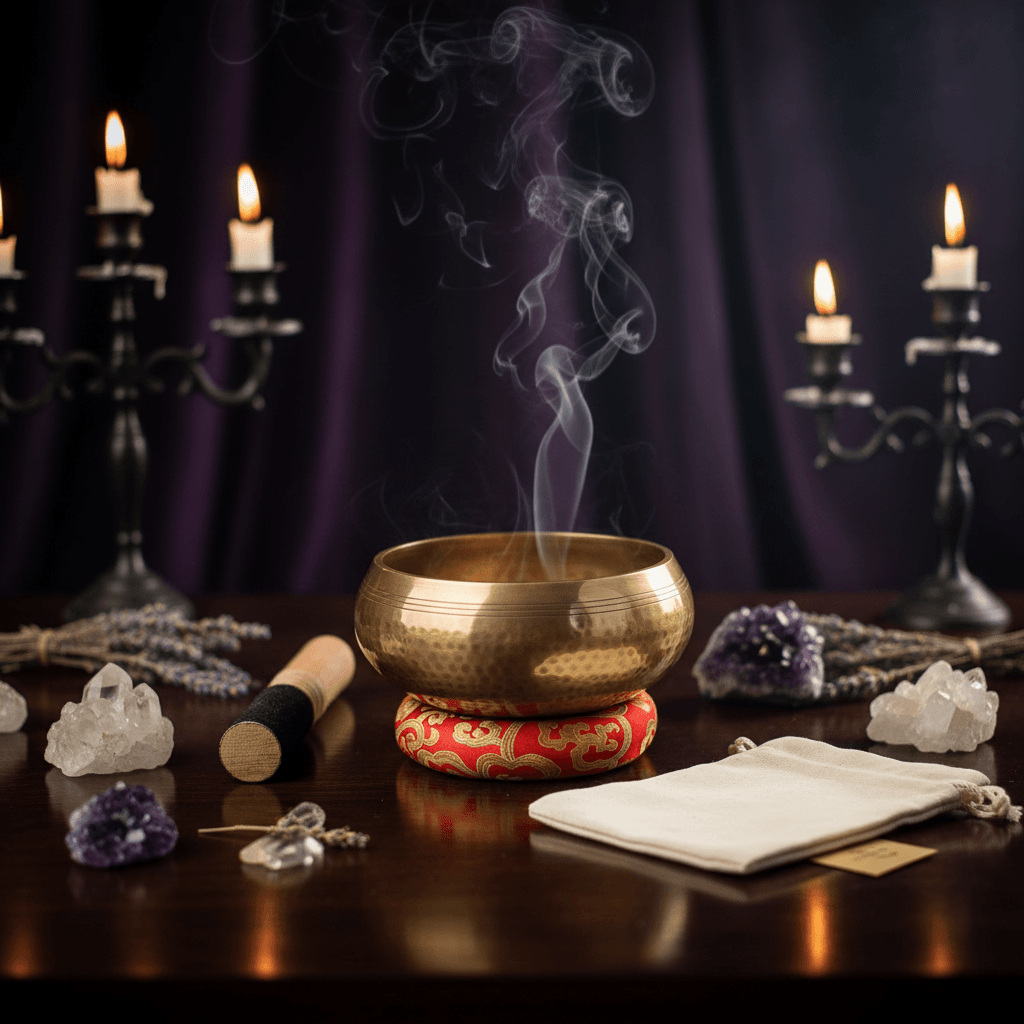
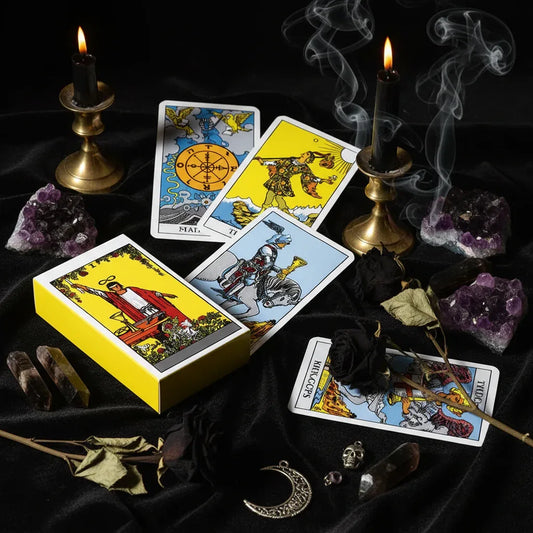
Each sabbat marks a unique phase in nature's cycle, planting, blooming, harvesting, resting, and aligns with its own distinct magical energy. Together, the eight sabbats create a full circle of life, death, and rebirth, a calendar far older than the one most of us live by day to day.
For a quick-reference summary alongside the wider history of paganism itself, see our paganism guide. This piece goes deeper into each individual sabbat: where it actually comes from, what it genuinely means, and exactly how to mark it with ritual and the right tools.
Jump to a Sabbat
Samhain (pronounced sow-in) marks the end of the harvest season and the beginning of the dark half of the year in Celtic tradition, and it is the sabbat most consistently identified as the Witches' New Year, since the old year is considered to end here before the wheel turns again toward Yule. The Celtic peoples believed that on this night the veil between the world of the living and the world of the dead grew thin enough to cross, allowing ancestors and spirits to walk among the living once more.
It is a time to honour ancestors, work directly with spirit, and release whatever from the past year no longer needs carrying forward. Traditional practices include setting a place at the table for the dead, lighting candles to guide spirits home, and performing divination, since the thinned veil was believed to make messages from beyond unusually clear on this single night of the year.
Ritual Tools for Samhain
Mugwort for psychic opening and divination, black candles for ancestor work, and tarot or oracle cards for the thin-veil divination this night is known for. Browse the full Samhain and Halloween collection for goblets, décor, and amulets charged for this season.
Shop the Samhain CollectionYule celebrates the rebirth of the Sun at the precise astronomical point of the year's longest night, after which daylight begins its slow return. Many Yule customs, the burning of a Yule log, evergreen decoration, candlelit feasting, predate Christmas by centuries and were directly absorbed into the Christian winter festival as it spread across pre-Christian Europe.
This sabbat is ideal for hearth magic, renewal work, and tending an inner light during the year's darkest point. It marks a genuine turning point rather than an ending: from this night forward, the days lengthen again, making Yule a sabbat of quiet, patient hope rather than loud celebration.
Ritual Tools for Yule
Cinnamon and pine for warming, prosperity-aligned scent, gold or red candles for solar rebirth, and a clear quartz charged with intention for the returning light.
Shop Yule CandlesImbolc honours Brigid, the Celtic goddess of healing, poetry, and the sacred flame, later absorbed into Christian tradition as Saint Brigid of Kildare. The name is widely understood to derive from an Old Irish term meaning "in the belly," referencing the pregnancy of ewes at this point in the agricultural year, the first genuine sign that spring is approaching even while winter still holds the land.
This sabbat carries the first real sparks of spring beneath the surface, making it the natural time for purification rituals and setting clear intentions for what is about to grow. Traditional Imbolc practice includes lighting candles in every window of the home and a thorough seasonal cleaning, a literal sweeping out of winter's stagnant energy.
Ritual Tools for Imbolc
White candles for purification, sage or palo santo for the seasonal clearing, and a selenite wand to support fresh intention-setting.
Shop Cleansing ToolsOstara marks the spring equinox, the precise astronomical moment when day and night fall into exact balance before daylight begins to claim the greater share. The name derives from the Germanic goddess Ōstara or Eostre, associated with dawn, fertility, and the renewal of life, and is the genuine etymological root behind the modern word Easter, whose egg and hare symbolism traces directly back to pre-Christian spring fertility custom.
This sabbat is the clearest expression of balance on the entire Wheel, making it ideal for workings that require equilibrium between opposing forces, alongside fertility magic, new growth, and the planting of literal or symbolic seeds for the year ahead.
Ritual Tools for Ostara
A dedicated Ostara Spring Equinox collection covers crystals, candles, and altar supplies specifically curated for balance and renewal. Green aventurine for new growth pairs especially well with this sabbat's themes.
Shop the Ostara CollectionBeltane is one of the four great Celtic fire festivals, marking the point when livestock were traditionally driven between two bonfires for purification and protection before being moved to summer pasture. The name likely derives from a Celtic root meaning bright fire, and the festival sits exactly opposite Samhain on the Wheel, its mirror in light rather than shadow.
This is the sabbat of fire, fertility, passion, and the celebration of life's creative spark in every sense, romantic, artistic, and literal. Beltane is the traditional season for handfasting, the pagan and Wiccan ceremony of committed union, and for maypole dancing, whose interwoven ribbons directly symbolise the union of masculine and feminine creative energy.
Ritual Tools for Beltane
Rose petals for passion and union, red candles for fire and creative spark, and for couples marking a handfasting, browse ritual wear suited to the ceremony.
Shop Beltane HerbsLitha marks the summer solstice, the longest day of the year and the precise point of the Sun's maximum power, the exact midpoint and mirror of Yule on the opposite side of the Wheel. Midsummer fires, all-night vigils, and herb-gathering at dawn are among the oldest documented Litha customs, with many cultures across Europe holding that herbs picked at this exact moment carry their strongest possible potency.
This is the height of solar magic, the sabbat most aligned with abundance, joy, and active manifestation work, since the Sun's energy at its yearly peak amplifies intention more than at any other point on the Wheel. It is an excellent time for charging tools in direct sunlight and for any working that calls for bold, confident, outward energy rather than quiet introspection.
Ritual Tools for Litha
A dedicated Litha Midsummer collection is curated specifically for solstice ritual supplies. Citrine and sunstone both align strongly with this sabbat's solar peak.
Shop Litha MidsummerLughnasadh (also called Lammas) takes its name from the Celtic god Lugh, a master craftsman and warrior deity, and traditionally marked the beginning of the grain harvest, the first opportunity each year to genuinely taste the results of the season's labour. The festival is associated with games, feasting, and communal celebration, alongside the more sober recognition that harvest always involves something cut down so that something else may be gathered in.
This sabbat carries a genuine theme of sacrifice alongside its gratitude, the first harvest is also the literal end of certain growing things, and Lughnasadh asks practitioners to honour both the gift and its cost. It is a strong time for gratitude practice, for honouring the creative labour already invested in any ongoing project, and for the first honest assessment of how the year's intentions are actually unfolding.
Ritual Tools for Lughnasadh
Citrine and pyrite for abundance and gratitude work, and a dedicated grimoire for recording the first honest harvest of the year's intentions.
Shop Abundance ToolsMabon marks the autumn equinox, the second point of perfect balance between day and night on the Wheel, and the second harvest festival following Lughnasadh. The name was popularised by twentieth-century Wiccan tradition, drawing on the Welsh mythological figure Mabon ap Modron, though the equinox itself has been marked as a harvest and balance festival across cultures for far longer than that specific naming.
Mabon is the natural pagan counterpart to modern Thanksgiving, a time for gratitude, for sharing the second and often final major harvest, and for genuine reflection as the year visibly turns toward darkness. With night now overtaking day from this point forward, Mabon is widely considered the natural beginning of shadow work, preparing the ground for the introspective season that runs through to Samhain.
Ritual Tools for Mabon
Smoky quartz for grounded reflection, amber for harvest gratitude, and balance-aligned crystals for this equinox's defining theme.
Shop Mabon Altar SuppliesSabbat Dates: Australia and Southern Hemisphere Reference
Because Sorceress Sanctuary serves an Australian audience, the table below leads with Southern Hemisphere dates, where each sabbat is offset by roughly six months from its Northern Hemisphere origin, aligning the festival with the season it actually describes rather than the calendar date associated with where it began. Solstice and equinox dates shift by a day or two each year depending on the exact astronomical moment, so check a current lunar or solar calendar for the precise date in any given year.
| Sabbat | Southern Hemisphere Date | Northern Hemisphere Date | Shop |
|---|---|---|---|
| Imbolc | 1 August | 1 February | View |
| Ostara | ~22–23 September | ~20 March | View |
| Beltane | 31 October | 1 May | View |
| Litha | ~20–23 December | ~20–23 June | View |
| Lughnasadh | 1 February | 1 August | View |
| Mabon | ~20 March | ~22–23 September | View |
| Samhain | 1 May | 31 October | View |
| Yule | ~20–23 June | ~20–23 December | View |
A Note on Following the Northern Calendar Instead
Some Southern Hemisphere practitioners deliberately choose to keep the traditional Northern Hemisphere dates regardless of their own season, prioritising consistency with the wider global Wiccan community and published source material over local seasonal accuracy. Both approaches are genuinely valid; what matters is that the choice is a conscious one rather than an accident of using a Northern Hemisphere resource without realising the offset.
Living the Wheel: Where to Actually Start
How do you actually begin practising the Wheel of the Year without feeling overwhelmed?
Start by celebrating one sabbat that genuinely resonates with you, build a small, simple ritual around it, light a candle, and speak gratitude to the season, then let the remaining seven sabbats join your practice gradually over the following year rather than attempting all eight from a standing start.
Practising the Wheel of the Year invites witches to live in tune with nature, whether through seasonal feasts, altar changes, or simple rituals under the moon. Each sabbat brings a new opportunity to align your inner world with the Earth's sacred turning, but that alignment builds over repeated cycles, not a single attempted year of perfect observance. Choose whichever sabbat is coming up next on the calendar above, mark it properly, and let the rest of the wheel introduce itself to you in its own time.
Shop Seasonal Altar SuppliesWitch Tip
- ◆Start by celebrating one sabbat that resonates with you. Build a small ritual, light a candle, and speak gratitude to the season. Over time, these sacred rhythms will become part of your bones and breath.
Seasonal Altar Checklist
Print this section and keep it with your altar supplies. Use the browser print function to save a clean printable copy ahead of each sabbat.
Before Any Sabbat
- Cleanse the altar space with smoke or sound
- Swap the altar cloth to a seasonal colour
- Gather sabbat-specific herbs and candles
During the Ritual
- Speak gratitude for the closing season
- Set one clear intention for the season ahead
- Light a candle in the sabbat's correspondence colour
After the Sabbat
- Record the date and your intention in a grimoire
- Note this sabbat's date for next year
- Mark the next sabbat on your calendar
Mark Every Turn of the Wheel
Seasonal collections for Samhain, Ostara, and Litha, plus candles, herbs, and crystals for every sabbat in between. Free shipping on all orders over $35 across Australia and the US.