Samhain Deities: Gods and Goddesses of the Veil

Share
Samhain & Halloween · Altar Guide
Samhain Altar Guide: Crystals, Offerings and Deity Tools
At Samhain, the veil is at its thinnest. What you place on your altar, and for whom, determines the depth of the working. This guide covers the five key deities and exactly what each one needs: crystals, offerings, symbols, and how to arrange them for a Halloween ritual that is properly prepared.
· Sorceress Sanctuary
Samhain is not simply a spooky holiday. It is the oldest fire festival in the Celtic calendar, the night when the veil between the world of the living and the world of the dead is at its most permeable, when the ancestors can be contacted, when the deities who govern death, fate, and the threshold are at their most present and accessible. What you do on this night, and who you call on, matters more than at almost any other point in the year.
The following are the five deities most commonly associated with Samhain and Halloween across the Irish, Greek, and broader European magical traditions. They are not all interchangeable: each has their own domain, their own offerings, their own way of working. Understanding who you are calling, and why, is the difference between a meaningful ritual and a candle lit for no one in particular.
Which deity should I call on at Samhain?
The answer depends on what you are doing. For ancestor contact and speaking with the dead: Persephone or Hecate. For protection during the Wild Hunt and releasing what must be released: Cernunnos. For working with fate, battle between the old and new, and transformative change: the Morrigan. For the raw power of winter's onset and the crone aspect of the turning year: the Cailleach. For magic at the crossroads, the triple path, and all liminal threshold work: Hecate. You can honour more than one, but work with one deity at a time in any single ritual. Calling five deities at once diffuses the working.
The Five Samhain Deities
Greek · Queen of the Underworld
Persephone
Persephone is the sovereign of the underworld, the only being in Greek mythology who holds complete authority in both the living world and the dead. At Samhain, when the veil is thinnest, she stands at its centre. She is the appropriate deity for ancestor contact, for speaking with those who have died, and for any working that involves the threshold between the living and the dead. Her offerings are pomegranate seeds, narcissus flowers, and anything from the harvest placed on the earth.
Read the full guide: Persephone: Queen of the Underworld
Greek · Goddess of the Crossroads
Hecate
Hecate is the goddess of magic, the crossroads, and the liminal threshold. She predates the Olympian gods in her origins and was never fully absorbed into the Olympian structure: she retained her authority over the underworld, the sky, and the earth simultaneously. At Samhain, she appears at the crossroads with her torches, lighting the way for the dead to find their path and for the living to find their way through the dark. She is the patron of witches, and her night is Halloween. Offerings at a crossroads: eggs, garlic, honey, small cakes, anything left and not looked back upon.
Irish · Goddess of Fate and War
The Morrigan
The Morrigan is present at Samhain as the force of fate, the one who decides what survives the turning of the year and what does not. In the Irish mythological cycle, the great battle of Magh Tuireadh takes place at Samhain. She does not take sides in the conventional sense: she sides with what must prevail, with the movement of fate. Working with her at Samhain is working with what must change and what must go, with the release that the dying year demands, with the truth of what is ending whether you are ready or not.
Read the full guide: The Morrigan: Goddess of Fate, War and Magic
Celtic · Lord of the Wild Hunt
Cernunnos
Cernunnos leads the Wild Hunt at Samhain: the spectral procession of the dead and the ungoverned that sweeps through the world at its darkest. In modern witchcraft practice, the Wild Hunt is not simply a mythological event but a working: an invitation to the wild, ungoverned energy of the Hunt to sweep through the working space and carry with it what must be released. Leave offerings outside on Samhain night: grain, bread, wine poured on the earth. Stand at the threshold. Name what you release. Do not look back.
Read the full guide: Cernunnos: The Horned God and the Wild Hunt
Scottish / Irish · Crone of Winter
The Cailleach
The Cailleach (pronounced kall-yach) is the divine hag, the crone of winter, the ancient one who strikes the ground with her staff to bring frost and whose face is blue-grey with cold. She rules from Samhain to Beltane: the dark half of the year is her domain. She is older than Brigid, older than most of the named deities in the Irish and Scottish tradition. Working with her at Samhain is working with the raw power of winter's onset, with what endures through the cold, with the stripped-back truth of the season. She accepts honest offerings: plain oatcakes, whisky, anything set outside in the cold.
| Deity | Tradition | Samhain Role | Primary Offering |
|---|---|---|---|
| Persephone | Greek | Ancestor contact, the threshold between living and dead | Pomegranate seeds, narcissus |
| Hecate | Greek | Crossroads magic, lighting the way for the dead, patron of witches | Eggs, garlic, honey, left at a crossroads |
| The Morrigan | Irish | Fate, what must change and what must go | Red wine, crow feathers, blood-red crystals |
| Cernunnos | Celtic | The Wild Hunt, releasing what must be released | Grain, bread, wine on the earth |
| The Cailleach | Scottish/Irish | Winter's onset, what endures, the crone power of the year's turning | Oatcakes, whisky, placed outside in the cold |
Building Your Samhain Altar
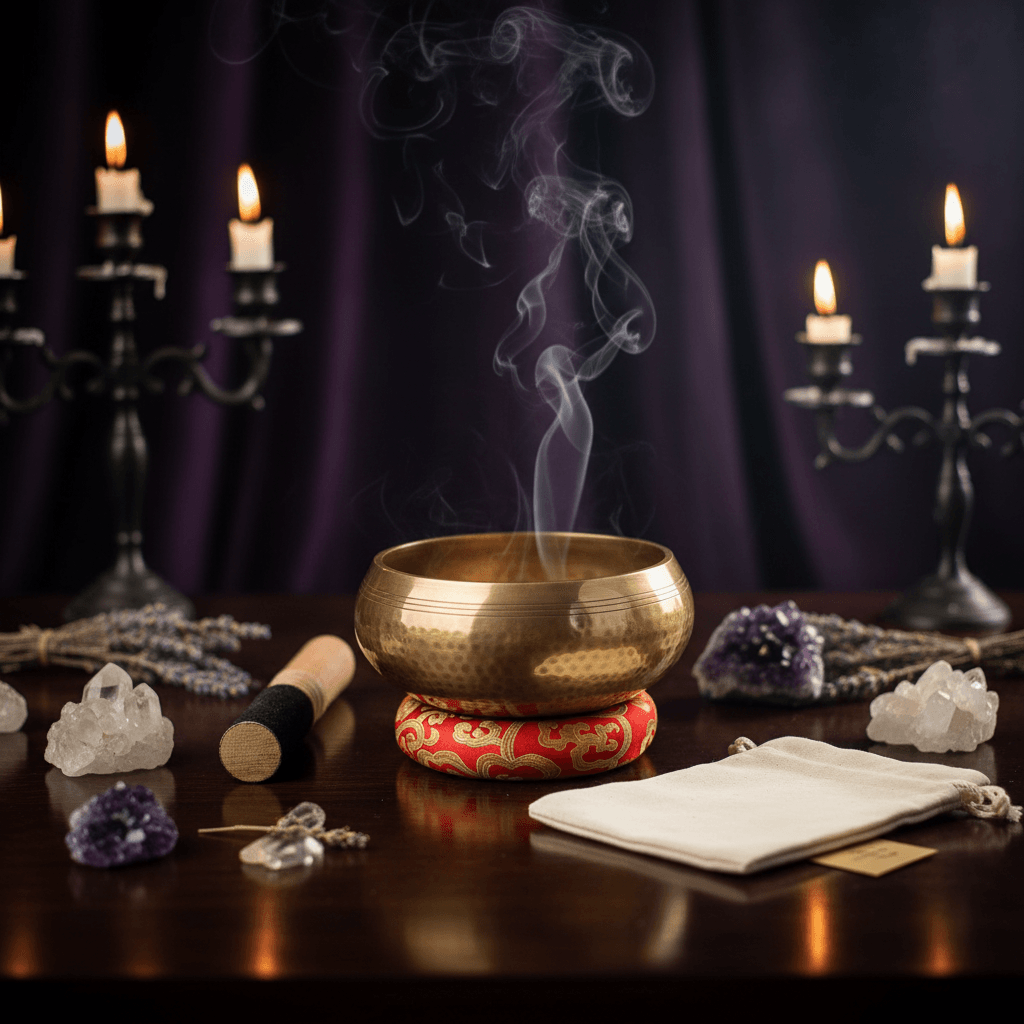
A Samhain altar is not decorative. It is functional: a working space for the night's ritual, a point of contact between the living and the dead, an offering site for the deities who are most present at this time. The aesthetic of the altar matters, but it follows from its function. Begin with what the altar needs to do, and the form will follow.
Photographs or names of those who have died. A glass of water (the dead are thirsty). A candle lit for each ancestor you wish to speak with. Something they loved when alive.
An image or symbol for the deity you are calling (no need to acquire something expensive: a drawn image, a stone that feels right, a handful of their sacred herbs is sufficient).
The harvest: apples, pomegranates, gourds, root vegetables. Fallen leaves. Bone or antler fragments if you have them. Dark flowers: chrysanthemums, marigolds, black dahlias.
Black tourmaline at the four corners of the altar. Obsidian at the centre. A lit black candle for what you are releasing. Salt at the altar's boundary.
Samhain Ancestor Contact Ritual
- Set your altar with photographs or names of ancestors you wish to contact, a glass of water, and a candle for each (or one large white candle for all). Add offerings appropriate to the deity you are working with.
- Light the candles at sunset or after dark. Say: "The veil is thin. Those who have gone before, you are welcome here. I set this light for you."
- Sit quietly. You are not summoning. You are making yourself available. The contact that comes in a quiet state is more reliable than what comes from effortful invocation.
- If you are working with a specific deity, make your offering now and state your working clearly: what you are asking, what you are releasing, what you are seeking guidance on.
- Write down anything that comes: impressions, images, words, feelings. Do not edit or dismiss what arrives. The interpretation comes later.
- When you are ready to close: thank the ancestors and the deity for their presence, extinguish the candles from left to right, and pour the glass of water onto the earth outside. Say: "The veil closes. I carry with me what was given. Go well."
- Leave any food offerings outside overnight. Retrieve them in the morning.
Free Resource: Samhain Altar and Ritual Planner
Plan your Samhain ritual in advance. The more intentional the preparation, the more focused the working.
Samhain Ritual Essentials
Black tourmaline, obsidian, smoky quartz, labradorite, and garnet for ancestor work, protection, and the Samhain veil. Free shipping on all orders over $45, globally.
Persephone: Queen of the Underworld Complete Guide
The Morrigan: Irish Goddess of Fate, War and Magic
Free shipping on all orders over $45, globally.