There is a moment most pagans can describe precisely. Not a dramatic conversion or a single revelation, but a quiet recognition, standing in a forest, watching a candle burn down, reading something old, that the world is more alive than you had been told. That the land has memory. That the cycles of the moon are not merely astronomical. That something in you has always known this, and has been waiting for language.
Paganism, in its broadest sense, is the recovery of that knowing. It is a collective term for a diverse family of earth-centred, polytheistic, animist, and nature-based spiritual traditions. It is not a single religion with a fixed creed, but a living web of practices that share a deep reverence for the natural world, the cycles of the year, the presence of many divine forces, and the innate sacredness of embodied life.
This guide goes deeper than most introductions. We will cover the history, the major traditions, the sacred calendar, the ritual tools, the deities, the trending conversations shaping practice in 2026, and how to build a working pagan practice that is authentically yours, supported throughout by the tools available at Sorceress Sanctuary's altar and ritual collection.
What Is Paganism? A Working Definition
The word pagan derives from the Latin paganus, meaning rural dweller or villager, those who maintained pre-Christian nature worship while cities adopted the new religion. It was initially a term of dismissal. Over the last century it has been reclaimed with considerable force and pride.
Modern paganism, often called neopaganism or contemporary paganism — encompasses a vast range of paths. What most share is a view of the divine as immanent rather than transcendent: present in nature, in the body, in the turning of seasons, in the relationship between all living things. Most pagan traditions are polytheistic, recognising many gods and goddesses rather than a single omnipotent deity. Most incorporate ritual practice tied to natural cycles. Most treat spiritual experience as personal and direct rather than mediated by institutional authority.
Globally, pagan communities are among the fastest-growing spiritual demographics. Research from the Pew Research Centre and the Association of Religion Data Archives consistently shows significant growth across the UK, Australia, the United States, and Scandinavia. In 2026, interest is particularly high among practitioners under 35, often arriving through ecological consciousness, ancestral reconnection, or dissatisfaction with organised religion.
The Major Pagan Traditions
A Comparative Overview
Paganism is not monolithic. Each tradition has its own theology, pantheon, ritual calendar, and cultural context. Understanding the major paths helps you locate where your own instincts and ancestry are drawing you.
Wicca
Formalised in the mid-twentieth century by Gerald Gardner and Doreen Valiente, Wicca is a modern initiatory witchcraft tradition venerating a Goddess and Horned God, following the Wheel of the Year, and working within a structured ritual framework. It is the most widely practised pagan path in the English-speaking world, with both traditional covens and solitary practitioners.
Shop Wiccan Ritual SetsNorse Heathenry
Heathenry reconstructs the pre-Christian religious practices of the Norse, Anglo-Saxon, and Germanic peoples, venerating deities including Odin, Thor, Freya, and Loki. It is deeply rooted in ancestral veneration, runic practice, and the mythological cosmology of the Eddas. Our Nordic collection spans runic talismans, Viking aesthetic ritual tools, and sacred symbols drawn directly from this tradition.
Shop Runic TalismansCeltic Paganism
Celtic polytheism draws from the mythologies of Ireland, Wales, Scotland, and Gaul, venerating deities such as the Morrigan, Brigid, Cernunnos, and Lugh. Contemporary Druidry, associated with organisations such as OBOD and the Ancient Order of Druids, emphasises the sacred relationship between humans and the land, seasonal ceremony, and the bardic arts. Cauldrons and wands are central physical tools in Celtic practice.
Shop Wands and Ritual ToolsHellenism
The reconstruction and living practice of ancient Greek religion, Hellenism venerates the Olympian deities, Zeus, Hera, Athena, Hecate, Hermes, Aphrodite, and others. Through prayer, libation, and household altar practice. Hecate, goddess of magic, crossroads, and the underworld, holds particular significance for modern witches regardless of tradition. Our Hecate Statue is one of the most beloved pieces in the sanctuary.
Shop the Hecate StatueEclectic Paganism
Many contemporary pagans do not align with a single reconstructed tradition but draw intuitively from multiple sources, building a personal practice shaped by ancestry, geography, direct spiritual experience, and practical need. Hedgewitchery, the practice of the solitary witch who works with the land, herbs, and spirit realms, sits comfortably within this space. It is the most widespread form of modern pagan practice globally, and the most adaptable.
Shop Pagan SuppliesKitchen and Cottage Witchcraft
Rooted in the domestic magic of everyday life, kitchen witchcraft treats the home as a sacred space, cooking as ritual, and the garden as a living altar. Herbs, candles, and water features are central working tools. This is folk paganism at its most intimate and sustainable, requiring no formal initiation, no elaborate ceremony, and no expensive equipment, only attention and intention.
Shop Herbs and BotanicalsThe Wheel of the Year: The Pagan Sacred Calendar
One of the most recognisable frameworks shared across Wicca, Druidry, and many eclectic paths is the Wheel of the Year, eight seasonal festivals marking the turning of the solar and agricultural cycle. These sabbats are not arbitrary dates but moments when the relationship between the earth, the sun, and human community reaches a particular quality of intensity.
Most pagan traditions observe some version of this calendar. Nordic paths add their own feast days. Celtic traditions weight Samhain, Imbolc, Beltane, and Lughnasadh more heavily as the original four fire festivals. The solstices and equinoxes carry particular weight in Druidry. What matters is not which system you follow but that you observe the turning at all, because that observation changes how you move through time.
| Sabbat | Date (Southern Hemisphere) | Date (Northern Hemisphere) | Theme | Key Tools | Intensity |
|---|---|---|---|---|---|
| Samhain | 30 Apr / 1 May | 31 Oct / 1 Nov | Ancestors, death, veil thinning | Cauldron, black candles, obsidian | High |
| Yule | 20–22 Jun | 20–22 Dec | Rebirth of the sun, darkness into light | Candles, lighting, evergreens | High |
| Imbolc | 1–2 Aug | 1–2 Feb | First stirrings, Brigid, purification | White candles, herbs, water | Medium |
| Ostara | 20–22 Sep | 20–22 Mar | Spring equinox, balance, new beginnings | Crystals, seeds, Ostara tools | Medium |
| Beltane | 31 Oct / 1 Nov | 30 Apr / 1 May | Fertility, fire, the union of divine forces | Fire, red candles, flower crowns | High |
| Litha | 20–22 Dec | 20–22 Jun | Summer solstice, solar peak, abundance | Sunstones, citrine, solar herbs | High |
| Lughnasadh | 1–2 Feb | 1–2 Aug | First harvest, sacrifice, skill and craft | Grains, incense, woven talismans | Medium |
| Mabon | 20–22 Mar | 20–22 Sep | Autumn equinox, second harvest, gratitude | Autumn leaves, smoky quartz, feasts | Reflective |
Note on hemispheres: The dates above reflect the astronomical and seasonal reality. Southern Hemisphere pagans in Australia, New Zealand, and South Africa observe Samhain in April and Yule in June, honouring the land they live on rather than importing northern seasons wholesale. This is correct practice, not approximation.
Pagan Deities: Working With the Divine
Paganism's relationship with deity is fundamentally different from monotheistic religion. Rather than a single all-powerful creator god existing outside and above creation, most pagan traditions understand the divine as multiple, relational, and immanent within the world. Gods and goddesses are not abstractions but active presences with distinct personalities, domains, and desires. You do not simply believe in them, you build a relationship with them over time, through offering, attention, and devotion.
The question of how literally to understand polytheism is one of the most lively conversations in contemporary paganism. Some practitioners are hard polytheists who understand each deity as a distinct individual being. Some are soft polytheists who see all gods as aspects of a greater divine force. Many are animists who focus less on named deities and more on the spirits of place, land, and ancestor. All of these positions are valid and internally coherent — and the theology matters less, for most practitioners, than the quality of the relationship.
Deities Frequently Honoured in Modern Pagan Practice
The following are among the most widely worked-with deities in contemporary pagan communities globally, along with the offerings and tools most traditionally associated with each.
| Deity | Tradition | Domain | Sacred Tools | Shop |
|---|---|---|---|---|
| Hecate | Greek / Eclectic | Magic, crossroads, the underworld, protection | Cauldron, keys, obsidian, black candles | Hecate Statue |
| The Morrigan | Irish Celtic | War, fate, sovereignty, prophecy, transformation | Crow feathers, obsidian, red wine, iron | Crow Talismans |
| Brigid | Irish Celtic | Healing, smithcraft, poetry, hearth fire, spring | White candles, well water, herbs | Candles |
| Freya | Norse | Love, war, magic (seidr), sovereignty, death | Amber, gold jewellery, rose petals, cats | Nordic Jewellery |
| Odin | Norse | Wisdom, runes, poetry, death, battle, the wild hunt | Runes, mead, ravens, a staff or wand | Nordic Collection |
| Cernunnos | Celtic / Eclectic | Wildness, animals, the hunt, the underworld, nature | Antlers, cauldron, forest materials, green candles | Horned God Symbols |
| The Green Man | Pan-European / Eclectic | Vegetation, renewal, the cycle of growth and decay | Living plants, seeds, soil, garden tools | Home and Garden |
Pagan Ritual Tools: Building Your Sacred Kit
Ritual tools are not strictly necessary for pagan practice, the body, the breath, and the focused mind are sufficient for most work. But physical tools serve important purposes. They anchor intention in matter. They train the attention. They create a ritual container that tells the unconscious mind: something different is happening here. Over time, well-used tools accumulate their own charge.
The tools most commonly used across pagan traditions include the following, each linked to where you can source them at the Sanctuary.
The Altar Cloth
The foundation of any pagan altar, the cloth defines the sacred space and carries the visual language of your tradition. Our Mystic Altar Cloths are available in goddess, star, and pentagram designs, in 50x50cm and 75x75cm sizes. A cloth is not decoration, it is a boundary marker that tells both practitioner and any attending presences where sacred space begins.
The Cauldron
The cauldron is one of the most ancient and cross-cultural magical tools in existence. In Celtic tradition it belongs to the goddess Cerridwen, source of inspiration and transformation. In Wicca it represents the womb of the goddess and the element of water. Practically, it holds offerings, incense, small fires, and spell components. Search our cauldron collection for cast iron and ceramic options suited to both altar and outdoor ritual work.
The Wand
The wand directs will and energy, casting the circle in Wiccan ritual and serving as a general implement of focused intention across many traditions. Our Crystal Orb Wand and the full Wands and Besom collection cover everything from working wands to decorative altar pieces.
Candles
Candle magic is embedded in virtually every pagan tradition. Colour, scent, and size all carry meaning. A black candle banishes and protects. White represents purity and the goddess. Green is used for prosperity and earth magic. Red for passion, strength, and Beltane fire. Browse the full candles and holders collection for ritual-grade options, and consider our Crystal Flower Soy Wax Candle Gift Set for sabbat celebrations.
Crystals and Stones
Earth-based spiritual practice and crystal work are inseparable. Each stone carries a specific energetic signature aligned with particular deities, sabbats, intentions, and elemental forces. Quartz amplifies all workings. Amethyst serves spiritual connection and psychic protection. Moonstone holds the energy of the goddess. Our full crystal collection and the Crystal Yoga Set and Agate Crystal Set are excellent starting points.
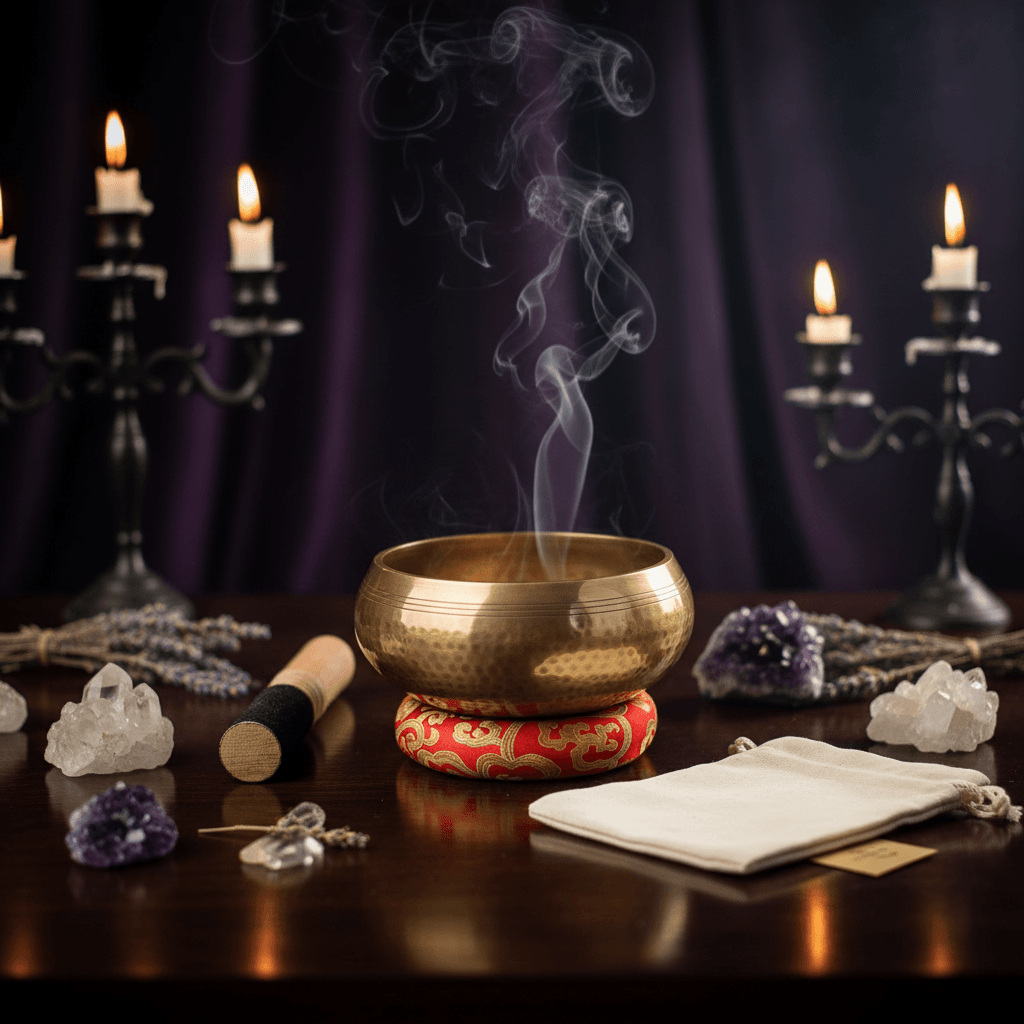
Incense and Smoke
Smoke has been used in sacred ritual for as long as humans have gathered around fires. It carries prayers upward, purifies space, shifts the atmospheric quality of a room, and signals to practitioner and spirit alike that a threshold is being crossed. Our incense and backflow holder collection includes ceramic, crystal tree, and cascading designs that make smoke cleansing an atmospheric ritual in itself. The 128-piece incense cone set is exceptional value for regular practice.
The Besom
The traditional witch's broom, the besom, is used to sweep ritual space energetically rather than physically, clearing the area before any working begins. It is also used to sweep protective blessings across thresholds. Our Wands and Besom collection includes traditional-style ritual besoms for both working and altar display.
Deity Statues and Altar Figures
A statue or figure for the deity or deities you work with creates a focal point for devotion, offering, and communication. It externalises the relationship. Our Hecate Statue and Gargoyle Statue are among the most beloved pieces in our sanctuary. Browse the full sacred decor collection for additional figures, including goddess and god representations.
Building Your First Pagan Altar
If you are beginning, start with five elements: a cloth for sacred space, a candle for fire, a bowl of water, a stone or crystal for earth, and incense for air. These four elements plus your own presence as spirit complete a working altar. Everything else is an elaboration of this foundation.
Browse our full altar supplies collection or our pre-curated spell kits and ritual sets to build from the ground up with confidence.
Shop Altar Supplies Browse Ritual SetsPaganism in 2026: What the Community Is Talking About
The pagan community is not static. These are the conversations, practices, and developments shaping the landscape of contemporary earth spirituality right now.
Ancestral Reconnection and Genetic Ancestry
The widespread availability of DNA ancestry testing has prompted many practitioners to explore the traditions of their specific heritage rather than adopting a generic eclectic approach. This has driven significant growth in less-visible paths including Slavic paganism, Finnish and Sami shamanism, Romano-British reconstructionism, and Iberian folk magic traditions. The push is toward specificity, toward depth, toward a practice rooted in genuine cultural inheritance rather than aesthetic borrowing.
Ecological Paganism and Climate Grief
For many younger practitioners, paganism is inseparable from ecological activism. The reverence for nature that underpins all pagan traditions is being expressed not only in ritual but in environmental action, rewilding projects, and the integration of climate grief as a genuine spiritual crisis requiring ritual response. The land is not just a backdrop for spiritual practice, it is a co-participant and its suffering is taken seriously.
Decolonising Pagan Practice
Critical examination of cultural appropriation within pagan spaces continues to be an important conversation. The question of which practices belong to which lineages, how to engage with traditions outside one's own heritage with respect rather than extraction, and how to honour the difference between living indigenous traditions and safely reconstructed historical ones is being engaged with increasing sophistication and care.
Solitary Practice and Digital Covens
The majority of pagans today practice alone or in small informal groups. Digital community has become increasingly central, with online sabbat circles, Discord covens, and social media platforms like TikTok's WitchTok providing community that was previously unavailable to isolated practitioners. The pandemic years accelerated this shift, and the infrastructure that developed has remained robust and significant.
Divination as Spiritual Practice
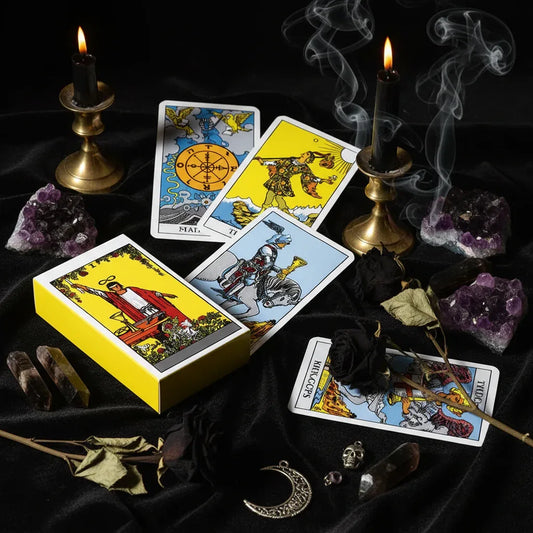
Interest in divination, tarot, runes, scrying, and oracles, has grown considerably alongside broader pagan practice. Divination is not fortune-telling but a practice of deepening relationship with the unconscious, with deity, and with the patterns underlying events. Our Gold Foil Tarot Set and the full tarot collection are among the most frequently visited sections of the Sanctuary.
Starting or Deepening Your Pagan Practice: Practical Guidance
Theory matters. But practice is where paganism actually lives. These are the most effective steps for building something real and sustainable.
Practitioner's Notes: Building a Living Practice
- ◆Observe the moon before the sabbats. Track the lunar cycle for one full month before committing to any formal practice. Notice how your energy, sleep, and mood shift across the 29-day cycle. This alone begins to re-orient you toward natural time, and it costs nothing.
- ◆Build an altar before you build a practice. A dedicated physical space — even a single shelf — creates a daily focal point that accumulates meaning over time. Begin with a cloth, a candle, and one object that feels sacred to you. Complexity comes later.
- ◆Choose depth over breadth, initially. Pick one tradition or one deity and work with that relationship seriously for six months before expanding. The tendency to collect practices without deepening any of them is the most common obstacle to meaningful pagan development.
- ◆Read the primary sources. For Norse practice, the Eddas. For Celtic, the Mabinogion and Irish mythological cycles. For Wicca, Doreen Valiente and Janet and Stewart Farrar. For Druidry, Iolo Morganwg alongside contemporary scholarship. Context changes everything.
- ◆Mark at least four sabbats this year. You do not need elaborate ceremony for every festival. A shared meal, a candle, a spoken acknowledgement of what the season means, this is enough. The consistency matters more than the complexity. Use our seasonal ritual sets to build structure around each festival.
- ◆Keep a journal or Book of Shadows. Record your observations, your rituals, what worked and what felt flat, the quality of different moons, what the land looks like on each sabbat. This document becomes your own primary source over years of practice.
- ◆Work with crystals aligned to your path. Moonstone for goddess work. Obsidian for shadow and underworld deities. Labradorite for psychic development and magical practice. Clear quartz as a universal amplifier for any working. Carry the stone that corresponds to your current focus and let the relationship develop slowly.
- ◆Find community, even a small one. Paganism can be practised entirely alone and many people prefer it that way. But even one other practitioner with whom you can share observations, rituals, and questions changes the quality and sustainability of practice considerably. Local pagan groups, online forums, and seasonal gatherings all offer this.
The Threshold Devotional
A Universal Sabbat Ritual for Solitary Practitioners
This ritual works at any of the eight sabbats with minor adjustments. It is designed to be completed in twenty minutes with minimal materials, making it sustainable as a regular seasonal practice rather than an occasional performance.
-
Prepare the space. Lay your cloth if using one. Place the candle at the centre, the incense to the east or wherever feels correct, and your crystal to the north. Your offering goes to whichever direction you associate with the deity you are honouring. Spend a moment with both hands flat on the surface, feeling the physical reality of what you are doing before beginning.
-
Ground and centre. Close your eyes. Take five slow breaths, each one longer than the last. On each exhale, allow any energy that is not yours, the noise and urgency of the day, to drain downward through your body into the earth. You do not need to be empty. You need to be present.
-
Light the incense. As the smoke rises, speak aloud: "I open this space to what is sacred. I acknowledge the threshold of [name the sabbat] and the turning it marks. I am here. I am paying attention." This is the most important line in the entire ritual, the explicit act of noticing. Most of the power of seasonal practice lives in the act of witness.
-
Light the candle. Hold your crystal in both hands and speak the intention of the season aloud, in your own words. At Samhain, name the dead you are honouring. At Imbolc, name what you are purifying or beginning. At Beltane, name what you are calling into fullness. The language does not need to be formal or beautiful. It needs to be true.
-
Make your offering. Place the food or drink at the designated direction. Speak a brief acknowledgement of the deity or spirit you are working with: "[Name], I make this offering in recognition of your presence and in gratitude for [specific thing]. I am listening." Then sit quietly for at least five minutes. Do not fill the silence. If something arises, an image, a feeling, a word, note it without analysing it.
-
Record immediately. Before you close the ritual, write down anything that came during the quiet period, however fragmentary. Date the entry and note the sabbat, the moon phase, the quality of the day. Over years, this record becomes a document of your relationship with the sacred calendar and with the divine forces you work with.
-
Close with gratitude. Extinguish the candle by snuffing rather than blowing. Speak: "The circle is open but unbroken. What began here continues. I carry this turning with me." Leave the offering in place until the following morning, then return it to the earth if it is biodegradable.
Repeat this ritual at every sabbat for one full year without significant modification. Consistency across all eight festivals, in the same space, with similar materials, using the same structure, creates a cumulative depth that no single elaborate ceremony can replicate. The power accrues slowly, and then suddenly it is unmistakeable.
Every Tool You Need Is Waiting
From altar cloths and cauldrons to crystals, candles, runic talismans, and seasonal spell kits. Sorceress Sanctuary sources every piece for practitioners who are serious about their path.