Litha 2026: How to Celebrate the Southern Summer Solstice
Share
Litha 2026: How to Celebrate the Southern Summer Solstice
Everything you need to know about Litha in the southern hemisphere, with the 2026 date, the history behind the sabbat, and practical rituals for the longest day of the Australian year.
Litha is the wheel of the year sabbat marking the summer solstice, the longest day and shortest night of the year. In the northern hemisphere it falls around 21 June. In Australia, New Zealand and the rest of the southern hemisphere, it falls around 21 December, putting it right in the middle of the Christmas and New Year period that dominates the calendar.
That timing creates something specific for Australian witches: a sabbat of fire, light and peak solar energy in the same week as the cultural noise of the summer holiday season. Working with Litha in the southern hemisphere means finding the sabbat inside the season you are already in, rather than importing a festival designed for a northern winter that is heading towards darkness at the same time.
This guide covers the history and meaning of Litha, the 2026 date and timing, how to work with the energy of midsummer in an Australian summer, and practical ritual ideas for celebrating alone or with others.
Litha 2026: Date and Timing
Southern Hemisphere Summer Solstice 2026
22 December 2026 at 6:50am AEST (Brisbane time). The exact moment is 20:50 UTC on 21 December, which is 6:50am Tuesday 22 December in Brisbane. The sun enters Capricorn and reaches its southernmost point. This is the longest day and shortest night of the year in Australia.
The solstice is an astronomical event, not a fixed calendar date. In the southern hemisphere it falls between 21 and 23 December depending on the year. For 2026, the solstice falls on 22 December 2026 (Brisbane time), which is a Tuesday.
Traditional practice observes Litha on the solstice itself or on the eve before it. If you are working around work, family and the general chaos of the Australian pre-Christmas period, any date between 19 and 24 December carries the solstice energy and is considered appropriate for Litha ritual work.
What Litha Is and Where It Comes From
The word Litha is recorded in the Old English calendar used by the Anglo-Saxon monk Bede in the eighth century, where he describes the months around midsummer. The term was adopted into modern Wicca and neopagan practice by Gerald Gardner and his contemporaries in the mid-twentieth century as part of the reconstructed eight-sabbat wheel of the year. The midsummer fire festival itself is older and broader, with parallels across European folk traditions including the Scandinavian Midsommar, the Celtic feast of Alban Hefin, and the widespread tradition of bonfires lit at the sun's peak.
In the wheel of the year as it is commonly practised today, Litha sits opposite Yule on the wheel. If Yule marks the return of the light at the darkest point of the year, Litha marks the peak of the light before it begins to wane. The sun god is at his fullest power; the goddess as mother is at her most abundant. After the solstice, the days begin to shorten, moving towards the first harvest at Lammas/Imbolc and eventually back to the dark half of the year.
In the southern hemisphere, this mythological arc runs on its own cycle. Our Litha falls as Christmas approaches, in a season that is already culturally saturated with themes of abundance, light, gathering and generosity. For many Australian practitioners, Litha and the Christmas/New Year period sit alongside each other rather than conflicting, with the sabbat offering a quieter, more intentional layer of practice within a noisy season.
The Energy of Midsummer in Australia
Australian midsummer is not abstract. It is cicadas and 35-degree days, thunderstorms building in the afternoon, the smell of dry grass and sunscreen, long evenings that do not cool until well after dark, stone fruit at the market and mangoes appearing on every kitchen bench. If you are practising in this season, you are practising in heat, abundance, expansiveness and sometimes a kind of almost-too-much quality that the solstice peak can carry.
Litha magic in this context is about working with what is actually present rather than imagining a northern midsummer that looks nothing like the season outside your window. The correspondences shift slightly:
Traditional Litha Correspondences
- Fire, the sun, gold and yellows
- Peak solar energy, fullness, strength
- Oak and holly (the oak and holly kings)
- Herbs: St John's wort, lavender, chamomile, mugwort
- Honey, mead, fresh fruit, summer flowers
- Faeries and liminal spaces
- Intention at peak power, what you are building towards
Australian Midsummer Additions
- Eucalyptus, wattle, banksia, grevillea
- Stone fruit: peaches, plums, cherries, mangoes
- Red and gold native flowers; dried seed pods
- Cicada shells as symbols of transformation and emergence
- Rain and storm energy alongside fire (summer storms)
- The ocean and outdoor water as cooling and cleansing
- Paperbark, saltbush, kangaroo paw
None of this requires abandoning the traditional symbolism. It is about layering what is present where you actually are. A Litha altar with wattle branches, fresh mangoes and a yellow candle is more grounded in the actual season than a recreation of a northern midsummer aesthetic imported wholesale.
What to Work With at Litha
What Litha is Good For
Litha is a time of peak energy, which makes it well-suited to work that benefits from that amplification. It is not a reflective sabbat, in the way Samhain or the winter solstice are. It is outward, active, expansive. The kinds of intentions that align with this energy include:
- Bringing a project, creative work or business effort to its fullest expression before the year turns
- Recognition, visibility and stepping into the light in some way you have been hesitating around
- Abundance and prosperity work at the peak of their power before the harvest season begins
- Releasing doubt or fear that has been holding you back from claiming something you have been working towards
- Setting clear intention for the new year from a point of fullness rather than the pressure of January
- Celebrating what has been built through the year from Yule (June) onwards
- Protective work using fire and light energy
What Litha is Not Particularly Suited For
Letting go, releasing, turning inward and working with shadow are not Litha's primary domain. The solstice peak is not the best moment for release work because the energy is not moving in that direction. The energy after the solstice, as the days begin to shorten, is better for releasing work. If you have something to let go of, Lammas (1-2 February in the southern hemisphere) or the first waning moon after the solstice are more natural timing choices.
Litha Ritual: A Simple Midsummer Practice
This is a standalone ritual for one person. It can be adapted for a group.
Midsummer Ritual for the Summer Solstice
- Set up at or after sunset on 22 December. The solstice is a good moment to work, but evening is preferable in an Australian summer for practical reasons: the heat breaks, there is light until late, and the energy of a long summer evening carries the solstice quality well.
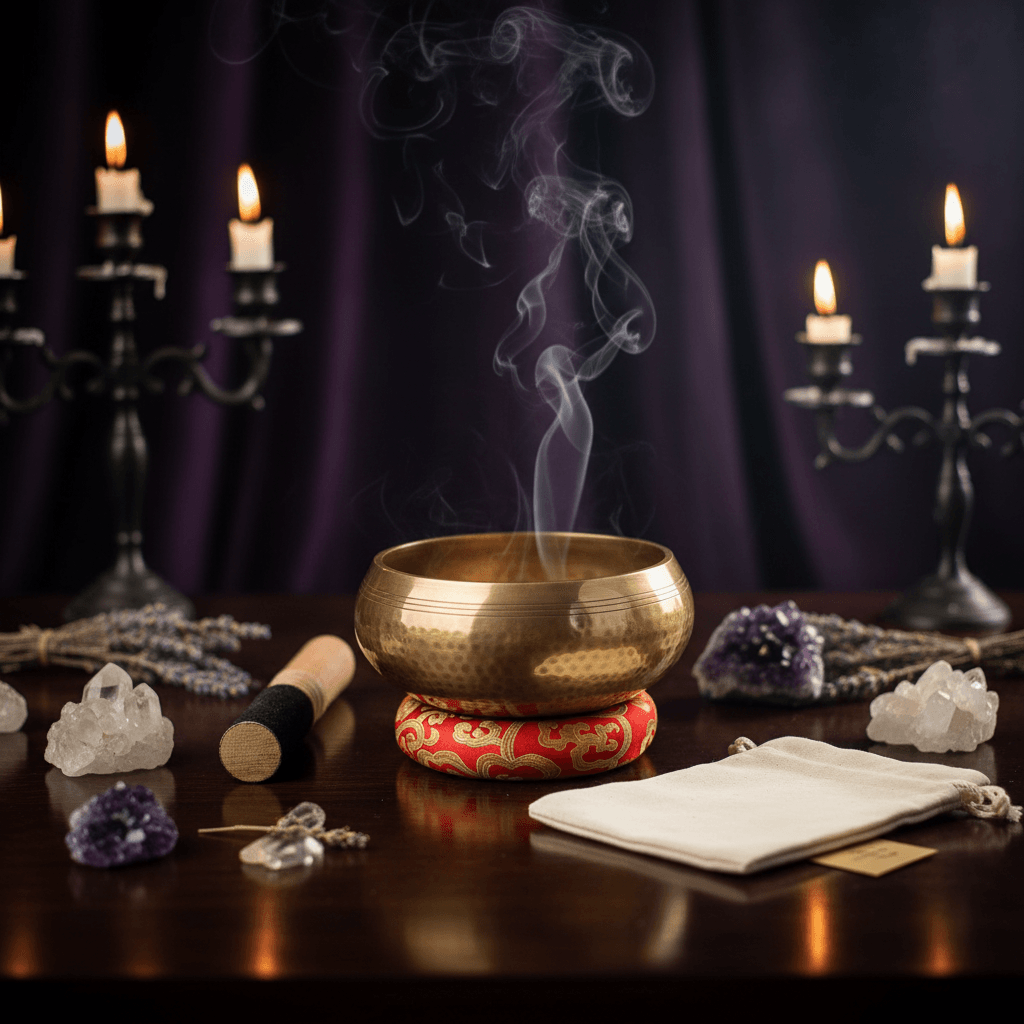
- Create a simple altar facing north. North is the direction of the sun in the southern hemisphere. Use yellow, gold or red. Add a white or gold candle, a piece of fresh seasonal fruit, any flowers or native botanicals available to you, and a stone or crystal that feels like summer energy (citrine, carnelian, sunstone, or simply a warm-feeling piece of quartz).
- Light the candle. Acknowledge the solstice: "This is the longest day. The sun is at its peak. I am at the full point of this year's cycle."
- Reflect for a few minutes on what you have built this year. Not what you have not done, but what you have. What grew? What came through? What are you bringing to fullness this solstice?
- Write your peak-of-the-year intention on a small piece of paper. This is not a resolution. It is a declaration of something you are claiming now, from this point of fullness. Fold it and place it on the altar for the duration of the ritual.
- Sit with the candle until you feel complete. This can be ten minutes or an hour. If you have a Litha ritual kit, work with those items now.
- Close the ritual. Thank the sun, the season and whatever other powers you work with. The candle can be burned down or relit on subsequent nights through the week of the solstice.
- Eat the fruit as part of the ritual's close. This is a traditional act of marking the abundance of the season and completing the ritual within the body, not just in intention.
Litha in the Context of the Australian Wheel
In the southern hemisphere, the wheel of the year runs six months shifted from the northern version. The sabbat calendar for Australian witches looks like this:
- Yule (winter solstice): around 21 June
- Lammas/Lughnasadh (first harvest): 1-2 February
- Mabon/autumn equinox: around 20-21 March
- Samhain: 30 April - 1 May
- Yule (winter solstice): around 21 June
- Imbolc: 1 August
- Ostara/spring equinox: around 22-23 September
- Beltane: 31 October - 1 November
- Litha (summer solstice): around 22 December
Litha in this wheel comes at the end of a cycle that began at Yule in June, moved through the spring equinox and Beltane, and has now reached its peak of fire and light. After Litha, the wheel turns towards harvest: Lammas in February, the autumn equinox in March, and eventually Samhain and Yule again.
Working with this cycle as an Australian practitioner means letting the actual season guide the energy rather than following directions that apply to the opposite hemisphere. December in Australia is not heading towards darkness. It is in the full brightness of summer. Litha as a southern hemisphere practitioner is a genuine midsummer festival, not a translated one.
Litha Altar Ideas for Australian Homes
An altar does not need to be elaborate. The function is to give the energy of the sabbat a physical anchor in your space.
- A piece of yellow, orange or white cloth as a base
- A gold or yellow candle as the centrepiece representing the sun
- Fresh seasonal flowers: sunflowers, marigolds, Australian natives in yellow and gold tones
- Wattle branches, if in season in your region
- Fresh fruit: a mango, a small bowl of cherries, a peach
- A piece of citrine, carnelian, sunstone or tiger's eye
- A sun symbol: a drawn sun, a coin, a piece of amber
- A dried cicada shell, if you can find one, as a symbol of summer and transformation
- Water in a small bowl, as a cooling counterbalance to the fire energy and a nod to the summer storms
Frequently Asked Questions
When exactly is Litha in Australia in 2026?
The southern hemisphere summer solstice occurs at 20:50 UTC on 21 December 2026, which is 6:50am Tuesday 22 December in Brisbane (AEST). This is the astronomical anchor for Litha. Ritual observation can take place on 22 December or on any date between roughly 20 and 24 December to work within the solstice window.
Is Litha the same as Midsummer or Midsommar?
They are connected. Litha is the name used in modern neopagan and Wiccan practice for the summer solstice sabbat. Midsommar is the Scandinavian folk festival held near the same time, which predates modern Wicca and has its own distinct traditions around maypoles, flower crowns and outdoor celebration. Midsummer as a general term refers to the same seasonal event across a range of European folk traditions. In a witchcraft context, Litha and Midsummer are often used interchangeably for the same sabbat.
How is celebrating Litha different in the southern hemisphere?
In the northern hemisphere, Litha in June falls as the year moves towards the light half of summer. In Australia, the summer solstice falls in December. The key difference is that Australian Litha is a genuine midsummer festival rather than a translated one: the heat, the long days, the seasonal plants and the abundance of summer are actually present. The energy available for practice is a real midsummer rather than a theoretical one, which is an advantage. The main adjustment is using southern hemisphere flora, timing and seasonal context rather than importing northern hemisphere imagery and associations that do not reflect the actual season.
Do I need a bonfire to celebrate Litha properly?
No. Bonfires are traditional in some strands of Litha practice but they are not a requirement, and in an Australian summer they are often impractical or restricted by fire danger conditions. A candle carries the fire energy perfectly well. If you want to work with fire more expansively, a fire pit in a garden or a fireplace in an air-conditioned space works. The energy is not dependent on the size of the flame.
Ritual Tools for the Australian Summer Solstice
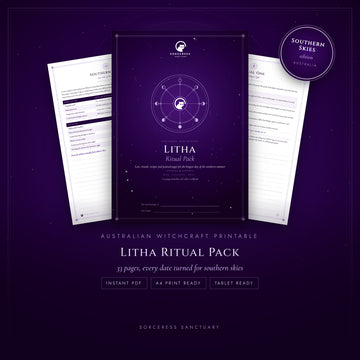
The Litha Ritual Pack includes printable altar cards, intention-setting worksheets and a full guide to the southern hemisphere sabbat calendar, designed for Australian practitioners.