What to Put on a Witch Altar: An Australian Supplies Checklist
Share
What to Put on a Witch Altar: An Australian Supplies Checklist
A practical, category-by-category checklist of altar supplies for Australian witches, with Southern Hemisphere seasonal swap suggestions and links to shop online.
An altar is a working space. It is not a display shelf, a decorative arrangement, or a performance for others. This guide treats it as what it actually is: a functional tool for magical practice, built to suit your needs and space.
What an Altar Is and What It Is Not
An altar in a witchcraft context is a dedicated space for magical and spiritual work. The word itself comes from the Latin altare, a high place used for ritual. In contemporary practice, it has no single fixed form: it can be a table, a shelf, a windowsill, a flat stone outside, or a corner of a bedside cabinet. What makes it an altar is not its size or its aesthetic but its purpose.
It is worth distinguishing the working altar from related concepts. A shrine is typically a static, devotional space dedicated to a deity, ancestor, or spiritual presence. A shrine holds memory and reverence. An altar holds tools. Many witches maintain both, or create a hybrid space that serves both functions. Neither is more correct than the other.
A working altar is arranged and rearranged with intention. Items come and go as practices change. The altar for a Samhain working will look different from the altar set up for a love spell, which will look different from the altar you use for daily divination. Flexibility is a feature, not a sign of disorganisation. Do not feel bound to a fixed arrangement.
What follows is a category-by-category checklist of what practitioners commonly include on a working altar. You do not need to buy or gather everything listed here to have a functional practice. Start with what resonates and build as your practice develops.
The Altar Supplies Checklist
1Altar Cloth or Base
The surface you place your tools on anchors the visual and energetic quality of your altar. Common options include fabric cloth (velvet, cotton, or linen in colours that correspond to your working), a wooden board or slice (cedar and oak are popular), a stone slab (slate or marble), or simply the bare surface of the furniture itself if it is meaningful to you.
A cloth has the practical advantage of being easy to swap out for different workings. A wooden board can be dedicated and cleansed once and left in place. Neither is better: choose what makes you feel most connected to the space.
- Altar cloth in black, deep purple, or a seasonal colour
- Wooden altar board or planchette-style board
- Stone or slate slab as a base
2Candles
Candles are the most versatile tool on any altar. They represent the fire element, serve as a focal point for spellwork, mark the boundaries of a ritual, and carry intentions as they burn. The three most common types for altar work are taper candles (tall, elegant, good for longer workings), pillar candles (self-standing, long burn time, suitable for multi-day spells), and chime candles (small, burn down in under an hour, ideal for single-working intention setting).
Colour carries meaning in candle magic. A brief reference:
| Colour | Primary Magical Associations |
|---|---|
| White | Purification, protection, general purpose, new beginnings |
| Black | Banishing, protection, absorption of negativity, shadow work |
| Red | Passion, courage, vitality, fire element, love (physical) |
| Pink | Self-love, friendship, gentle love, emotional healing |
| Green | Abundance, prosperity, growth, earth element, healing |
| Blue | Calm, communication, truth, water element, peace |
| Purple | Psychic ability, wisdom, spiritual work, protection |
| Yellow / Gold | Success, clarity, sun energy, air element, confidence |
| Orange | Creativity, ambition, joy, attraction |
| Silver | Moon energy, intuition, the feminine divine, dreams |
3Crystals
A crystal collection does not need to be large to be useful. Five stones cover the majority of what a working altar requires:
- Clear quartz: the all-purpose amplifier; can stand in for any other stone and boost any intention
- Black tourmaline: grounding and protection; excellent near the altar's perimeter or at entry points
- Amethyst: intuition, spiritual connection, calm; supports divination and meditation
- Rose quartz: love in all forms, self-compassion, emotional opening
- Selenite: cleansing, high-vibration connection, moonlight energy; also used to cleanse other crystals
Place crystals on your altar where they feel right or where they relate to your working. Clear quartz near candles amplifies the flame's intention. Black tourmaline at the corners grounds the space. Selenite on a shelf above keeps the energy clear over time.
4Incense and Smoke Cleansing
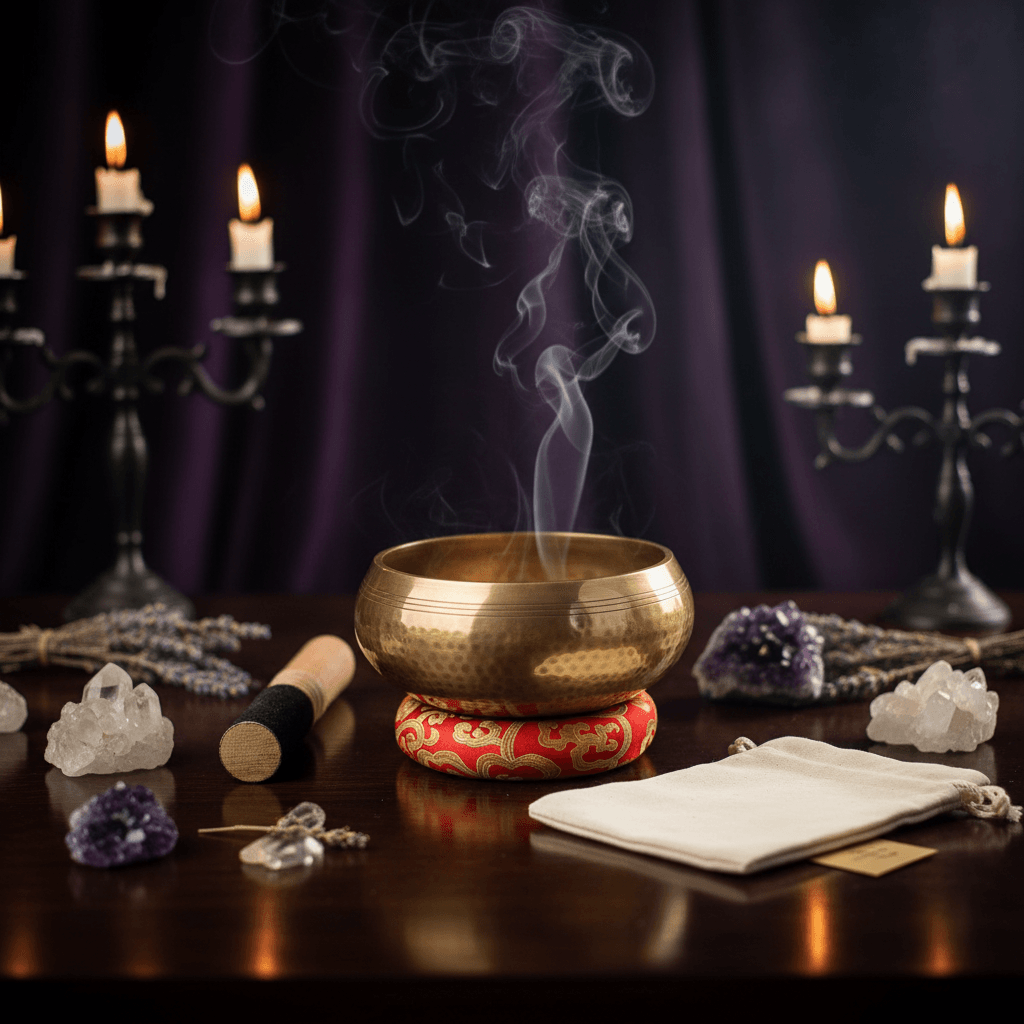
Smoke has been used in ritual across virtually every human culture for thousands of years. In contemporary practice, it serves to cleanse and consecrate a space, to signal the beginning of a ritual, and to carry intention. Options include incense sticks (most accessible, wide range of scents), resin incense on a charcoal disc (frankincense, myrrh, dragon's blood: more traditional and potent), and loose herb bundles or plant material for burning.
Australian witches should be aware of the ecological concerns around the widespread sourcing of some traditional cleansing plants. Look for sustainably grown or Australian-native alternatives where possible. Eucalyptus, wattleseed, and lemon myrtle are all meaningful to this land and available sustainably.
5Ritual Tools
The four classical ritual tools correspond to the four elements and have roots in various ceremonial and folk traditions. You do not need all four, and you do not need expensive versions. A kitchen knife can serve as an athame. A found stick from the garden can serve as a wand.
- Athame (knife or blade): represents the air element in many traditions; used to direct energy, cast circles, and cut cords in cord-cutting spells. Never used to physically cut materials in a ritual context.
- Wand: can represent either fire or air depending on tradition; used to direct will and intention, call quarters, and point energy. Wood type and length are personal choices.
- Chalice or cup: represents the water element; used to hold ritual water, wine, or other liquids. Can be as simple as a beautiful ceramic cup you dedicate to the practice.
- Pentacle: a disc or plate inscribed with a pentagram; represents the earth element; used as a surface for consecrating objects, a symbol of protection, and an anchor for the material plane.
6Deity or Seasonal Representation
If your practice involves working with deities, ancestors, or specific spiritual forces, an altar representation creates a point of connection. This might be a small statue or figurine, a printed image in a frame, a symbol associated with the deity (an owl for Athena, a crescent for Selene), or a natural object that embodies their energy. Seasonal representations shift with the Wheel of the Year: fresh flowers in spring, dried seed pods in autumn.
7Water and Salt
These elemental representations are among the most practical on the altar. A small bowl or vessel of water (spring, rain, or moon water) represents the water element and is used in many cleansing and blessing rituals. Salt, ideally sea salt, represents the earth element and is used for purification, protective circles, and warding. Black salt (salt mixed with ash or activated charcoal) carries stronger protective associations for banishing work.
Both should be refreshed regularly, particularly water. Do not leave stagnant water on an altar for extended periods.
8A Candle Snuffer and Matches
Practical items, often overlooked. Blowing out a candle is widely considered to disrespect the fire element in many traditional practices; a snuffer extinguishes it with intention. Dedicated matches, stored with your altar supplies rather than pulled from the kitchen drawer, keep your working space feeling set apart from the everyday. These small distinctions matter in establishing ritual mindset.
Southern Hemisphere Seasonal Swaps
Australian witches adapt the Wheel of the Year to the actual seasons of the Southern Hemisphere. This is not a compromise or a workaround: it is the appropriate practice for those of us in the southern part of the world. The dates of Celtic and Wiccan sabbats were established for the Northern Hemisphere, where the winter solstice falls in December. In Australia, December is midsummer.
The most important seasonal swaps to understand for your altar:
Litha (Summer Solstice): Falls in December in Australia, around the 21st. This is the peak of solar power, the longest day. Your altar for Litha might feature sunflowers, citrus, gold and yellow cloths, warm-coloured candles (gold, orange, red), and symbols of abundance and vitality. Northern Hemisphere practitioners celebrate this in June.
Yule (Winter Solstice): Falls in June in Australia, around the 21st. This is the dark time, the longest night, the point of stillness before the return of the light. Evergreen branches, pine cones, silver and deep blue candles, and symbols of the returning sun are appropriate. This is when Northern Hemisphere practitioners celebrate their Midsummer.
Samhain: Falls in late April or early May in Australia, as the land cools and the trees begin to turn. Our Samhain aligns with the natural dying-back of the season. Ancestor altars, dark-coloured cloths, bones or skulls as symbols, pomegranates, and late-autumn plant materials are all appropriate. Northern Hemisphere practitioners observe Samhain on 31 October.
Imbolc: Falls in late July or early August in Australia, as the first signs of spring stir beneath the surface. Snowdrops and jonquils, white candles, symbols of Brigid and the returning light, and seeds for the coming growing season are traditional.
The general principle: follow the actual seasons of your land rather than the calendar dates prescribed for the opposite hemisphere. Your practice will feel more alive and more grounded for it.
Printable Altar Checklist
A working summary of what to gather. Tick off as you acquire each item; build at your own pace.
- Altar cloth or base surface (fabric, wood, or stone)
- White candle (general purpose, always useful)
- At least 2 to 3 coloured candles appropriate to your current working
- Candle holders or a heat-safe surface
- Candle snuffer
- Dedicated matches or lighter
- Clear quartz crystal
- Black tourmaline
- Amethyst
- Rose quartz
- Selenite
- Incense sticks or resin and charcoal disc
- Small fireproof incense holder
- Small bowl for water
- Small dish of sea salt or black salt
- One ritual tool (wand, athame, or a consecrated knife)
- One ritual tool (chalice or dedicated cup)
- Pentacle disc or drawn symbol
- Deity representation or seasonal natural object (optional)
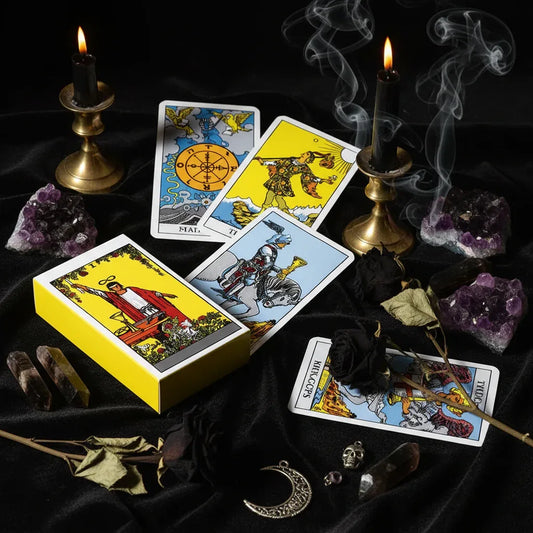
- Tarot or oracle deck stored nearby (optional)
- A dedicated journal or Book of Shadows
You do not need to buy everything at once. A white candle, a clear quartz, and a journal are enough to begin.
Stock Your Altar
Browse by category to build your altar supplies at your own pace.
Frequently Asked Questions
Do I need a permanent altar?
No. A permanent altar is a convenience, not a requirement. Many practitioners set up and dismantle their altar for each working, particularly those who share their living space or who are not open about their practice. A box or bag that holds your altar tools can be set out when needed and stored when not in use.
If you do have the space for a permanent altar, the benefit is that the space accumulates intention over time, and returning to it reinforces your practice. But permanence is not what makes an altar powerful. Your presence and intention do.
Can I use everyday objects on my altar?
Yes, and many experienced practitioners prefer to. A cup from your grandmother's kitchen can serve as a chalice with more genuine meaning than an expensive goblet bought for the purpose. A stick found on a walk can be a more potent wand than one purchased commercially. The key is dedication: take the time to cleanse the object and consciously set it apart for magical use.
The idea that witchcraft supplies must be specially made or expensively sourced is a relatively modern and largely commercial one. Folk practitioners throughout history used what they had at hand. What matters is the intention brought to the objects, not their origin or price.
What if I have very limited space?
An altar can fit on a single shelf, a windowsill, or even a small wooden board kept in a drawer. The minimum functional altar is a clean surface, a candle, and your focused attention. Everything else is an addition.
If space is genuinely limited, consider a portable travel altar kit: a small wooden box or tin that holds a tealight candle, a small crystal, a tiny vial of salt, and a folded altar cloth. This can be set up anywhere and stored anywhere. Many practitioners find the constraint of a small altar clarifying rather than limiting.
Do I need all four elements represented on my altar?
The four-element representation (earth, air, fire, water) is a convention from ceremonial magic and Wiccan traditions, not a universal rule. Many practitioners work with a four-element altar and find it useful as a grounding structure. Others work with fewer elements or with different symbolic systems entirely.
If you find the four-element framework meaningful, include it. If it feels forced or overly prescribed, leave it out or adapt it. An incense stick covers both fire and air in many arrangements. A salt and water bowl covers both earth and water. You can represent all four elements with two objects if you choose to.
Printable grimoire pages
Begin your own Book of Shadows
Record your tools, correspondences, rituals and results in a Book of Shadows Starter made for southern skies. Instant A4 PDF, print as often as you like.